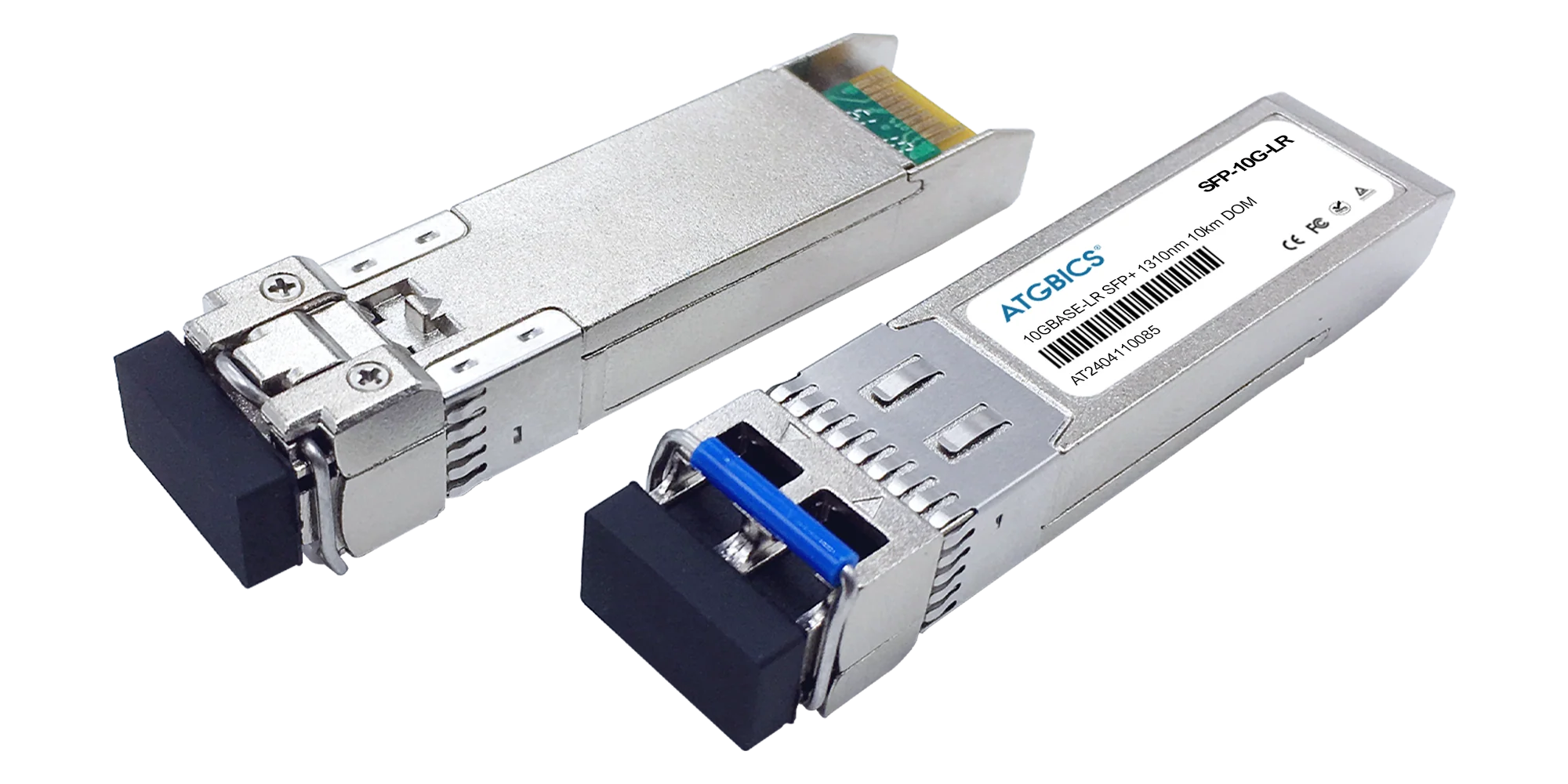
10GBASE-LR at the Network Edge: Quiet Links with Real Responsibility
Why Edge Links Matter More Than They Appear
When people discuss network upgrades, attention naturally goes to core switches, backbone capacity, and headline bandwidth numbers. Edge links rarely get the same focus. They are often described as “supporting infrastructure,” something that simply needs to work and stay out of the way. This is exactly where 10GBASE-LR continues to play an important role.
Edge connections carry traffic that may not be massive in volume, but is often critical in function. Authentication systems, logging platforms, backup controllers, monitoring collectors, and inter-building management networks all depend on stable edge connectivity. For these links, reliability matters far more than raw throughput.
The Nature of Edge Traffic
Edge traffic behaves differently from core traffic. It is usually predictable, bursty rather than constant, and closely tied to system health rather than user demand. These characteristics make 10GBASE-LR a natural fit.
A 10G link provides ample headroom for control-plane traffic, periodic synchronization, and occasional spikes during failover or maintenance events. At the same time, it avoids the cost and complexity of deploying higher-speed optics that offer little practical benefit in these scenarios.
Distance Without Drama
Many edge links span longer distances than people expect. Separate buildings on a campus, remote facilities within a metro area, or disaster recovery sites just outside the primary data center all introduce physical separation. 10GBASE-LR transceiver supports these distances comfortably over single-mode fiber without additional architectural layers.
This “distance without drama” is one of its understated strengths. Engineers can deploy long-reach links without redesigning topology or introducing optical transport equipment. The result is a clean, understandable network layout that remains easy to operate.
Why Simpler Optics Are Often Better at the Edge
Edge environments are rarely as controlled as core data centers. Fiber routes may be older. Patch panels may have been modified over time. Environmental conditions may fluctuate more. In such environments, simpler optics often perform better over the long term.
10GBASE-LR modules are generally tolerant of minor imperfections. They do not operate at extreme margins, and their behavior is well understood. This resilience reduces intermittent issues that are difficult to diagnose and easy to underestimate during design.
Operational Ownership and Responsibility
Another overlooked aspect of edge links is ownership. Core networks are often managed by specialized teams. Edge networks, by contrast, may fall under broader IT or facilities groups. These teams benefit from technologies that are easy to deploy, monitor, and replace.
10GBASE-LR fits well into this model. Spare parts are easy to stock. Compatibility concerns are minimal. When something fails, replacement procedures are straightforward. This reduces dependency on external expertise and speeds up recovery.
Edge Links as Stability Anchors
In many networks, edge links act as stability anchors during periods of change. While core infrastructure evolves rapidly, edge connectivity often remains unchanged for years. This continuity provides a stable reference point that helps teams isolate issues and manage transitions.
By keeping edge links simple and predictable, organizations reduce the overall volatility of their network. 10GBASE-LR supports this strategy by offering consistent performance across long deployment lifespans.
Cost Efficiency Where It Actually Matters
Cost discussions often focus on large-scale deployments, but edge networks are full of small, repeated decisions. Choosing an overly advanced solution for dozens of minor links adds up quickly. 10GBASE-LR offers a cost-effective balance that aligns with the real value of these connections.
Spending less on edge optics frees budget for areas where performance improvements actually matter. This allocation discipline is a sign of mature network planning.
When Edge Links Finally Need More Than 10G
There are cases where edge links grow into something more. New services may shift traffic patterns. Edge facilities may become aggregation points. In these situations, upgrading beyond 10G becomes justified.
The advantage of starting with 10GBASE-LR is clarity. When limits are reached, they are obvious. There is no ambiguity about underutilized capacity or wasted investment. The upgrade decision becomes data-driven rather than speculative.
The Psychological Comfort of Familiar Technology
Technology choices also affect how teams feel about their networks. Familiar tools inspire confidence. Confidence improves response time and decision quality during incidents.
10GBASE-LR benefits from years of collective experience across the industry. Engineers trust it. That trust reduces hesitation and second-guessing, especially during high-pressure situations.
Conclusion
10GBASE-LR remains valuable not because it dominates the core, but because it quietly supports the edge. It carries critical traffic over long distances without demanding attention or complexity. In networks where edge stability underpins overall reliability, 10GBASE-LR continues to be a sensible and deliberate choice. Its role may not be glamorous, but it is deeply practical — and that is often what matters most.
Keep an eye for more latest news & updates on Instafest!