What Is a Mono Power Amplifier and When Does It Make Sense?
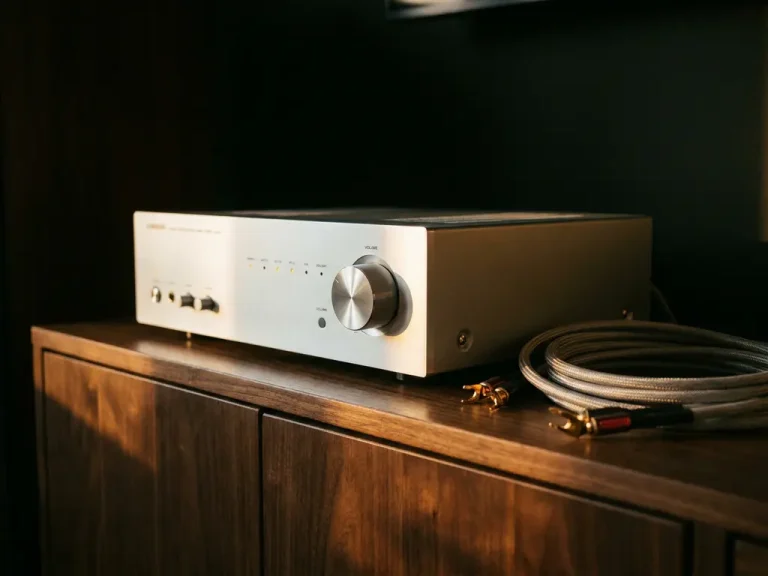
Most people are familiar with stereo amplifiers, which drive a left and a right speaker from a single box. A mono power amplifier works differently. It has one channel and drives one speaker, or one subwoofer, with all of its power. Using two of them, one for each speaker, creates a dedicated setup. This article explains how a mono power amplifier works and when it is worth considering, using the models listed in the Fosi Audio mono power amplifier collection.
The basic idea
A stereo amplifier contains two amplifier channels that share a case and often a power supply. A mono amplifier contains one channel with a power supply devoted to it. When you use two mono amplifiers, each speaker gets its own amplifier and its own power supply. The idea is that each speaker has plenty of power on hand and one channel cannot compete with the other for resources.
This is sometimes called a monoblock arrangement. It is more common in larger systems, though compact models make it available for desktop and small room setups too.
The V3 Mono Monoblock
The collection lists the Fosi Audio V3 Mono Monoblock Power Amplifier as a compact Class D mono amplifier. According to the page, it uses the TI TPA3255 chip and PFFB technology, and delivers up to 240 W at 4 ohms. PFFB stands for post-filter feedback, a design approach that uses feedback from the output stage to improve control.
The page says the V3 Mono is suited to bookshelf and floor-standing speakers, desktop systems and a dedicated left and right mono setup. It describes the benefit as stronger control and improved dynamics with power hungry speakers. Another page on the same site lists a signal to noise ratio of 123 dB and a SINAD of 101 dB for the XLR input of this model. SINAD is a measure that combines noise and distortion. Higher numbers generally indicate a cleaner signal, though real world results also depend on the speakers and the rest of the system.
A stereo amplifier that works in mono
Some stereo amplifiers can be switched into mono mode. The ZA3 Balanced Stereo Amplifier in the collection is described as a Class D amplifier that can switch between stereo and mono modes. One listing gives its output as 155 W by 2 in stereo, or 235 W in mono at 4 ohms. It has a balanced XLR input and Bluetooth. This flexibility means you can start with one unit as a stereo amplifier and, if you later buy a second, use both in mono mode.
Subwoofer amplifiers
Subwoofers also use mono amplifiers, because low frequencies are not directional in the same way and need only one channel. The collection lists several models for this purpose. The M04 is a compact mono subwoofer amplifier listed at 100 W. The M03 is described as a dedicated subwoofer mono amplifier with up to 300 W and switchable full frequency and sub bass modes. The M01 BT is a one channel mono amplifier with Bluetooth.
The page describes these as suitable for passive subwoofers, compact home theatre systems and desktop or small room setups. A passive subwoofer has no amplifier of its own, so it needs an external one.
When a mono amplifier makes sense
You may want one if your speakers are demanding and need more power than a small stereo amplifier can give. You may want one if you like the idea of a dedicated amplifier for each speaker, perhaps placed close to each speaker so that cable runs are shorter. And you may need one if you are adding a passive subwoofer to a system.
You probably do not need one if you have efficient speakers, a small room and a modest stereo amplifier that already does the job well. In that case a mono arrangement adds cost and complexity without much benefit.
What to check before buying
First, speaker impedance and power requirements. The power figures on the page are given at 4 ohms, so check how the amplifier behaves with your own speakers. Second, inputs. Check whether your source has the right connection, such as RCA or balanced XLR. Third, size and placement. Two amplifiers take more space than one, and each needs room for ventilation.
Fourth, power supply. Look at what each unit needs and make sure your power outlets suit them. Finally, check whether your source or preamp has outputs for two separate amplifiers.
Setting up two mono amplifiers
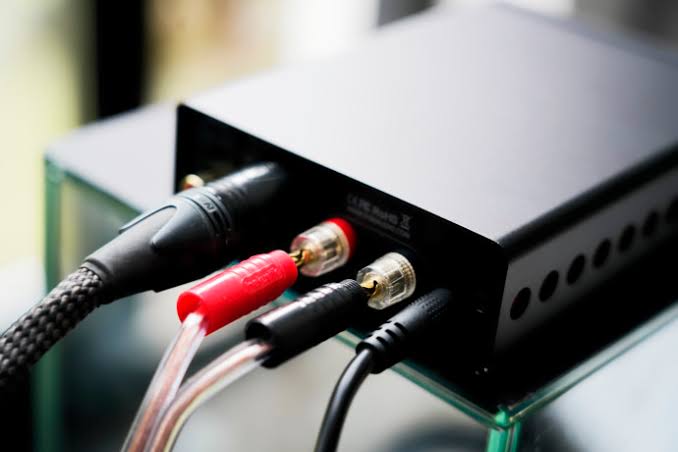
Connect the left channel from your source to one amplifier and the right channel to the other. Connect each amplifier to the speaker on its side. Keep the cables tidy and the same length where possible. Set the volume low at the start, and match gain settings on both amplifiers if they have them.
Test with a spoken recording and check that both speakers play at the same level. If one side is quieter, check the cables, the settings and the connections.
Safety
Always switch off before connecting or disconnecting speakers. Do not let speaker wires touch each other, because a short circuit can damage the amplifier. Keep amplifiers away from liquids, and do not cover vents.
Summary
A mono power amplifier gives a speaker or subwoofer its own dedicated channel. It suits demanding speakers, dedicated left and right setups and passive subwoofers. It is not necessary for everyone, but it is a useful option. Compare the models in the collection, read the full product pages and match power, inputs and size to your own system.