Residential Window Coverings Network for Curtains, Shades and Interior Design
Window coverings are an essential part of modern residential design, combining privacy, light control, energy efficiency, and interior decoration. They are no longer considered simple accessories added after completing a room; instead, they have become important design elements that influence comfort, atmosphere, and the overall appearance of living spaces.
A complete residential window coverings network includes different solutions such as curtains, shades, blinds, shutters, and smart window treatments. Each option provides unique benefits depending on the room type, architectural style, lighting requirements, and personal preferences of homeowners.
Modern interior design focuses on creating balanced environments where natural light, privacy, colors, textures, and furniture work together. The right window covering system can transform a simple room into a comfortable and visually appealing space while improving functionality.
Residential Window Covering Systems
Residential window covering systems are designed to control the amount of sunlight entering a home while improving privacy and enhancing interior aesthetics. These systems include various materials, designs, and operating methods suitable for different residential applications.
Unlike traditional window treatments that focused mainly on blocking light, modern solutions consider multiple factors such as insulation, automation, design coordination, and energy management.
Main Elements of Window Covering Systems
A complete window covering solution includes the fabric or material, operating mechanism, mounting hardware, and design style.
Curtain Materials and Fabrics
Curtains remain one of the most popular window covering options because of their versatility and decorative value. They are available in many fabrics, textures, and thickness levels.
Common curtain materials include cotton, linen, velvet, polyester, and blended fabrics. Lightweight fabrics allow natural light to enter, while heavier materials provide stronger privacy and light control.
Operating Systems and Hardware
Modern window coverings use different operating methods depending on convenience and design requirements.
Traditional systems use manual rods and tracks, while advanced solutions may include motorized controls and smart home integration.
Importance of Window Coverings in Residential Design
Window coverings influence both the practical and visual aspects of a home. They affect lighting, temperature, privacy, and interior style.
Controlling Natural Light
Natural light plays an important role in creating comfortable living environments. Window coverings allow homeowners to adjust brightness according to the time of day and room requirements.
Living rooms often benefit from flexible curtains that allow daylight while maintaining privacy, whereas bedrooms may require stronger light-blocking solutions for better rest.
Improving Privacy and Comfort
Privacy is one of the main reasons homeowners install window coverings. Properly selected curtains, shades, or blinds prevent unwanted visibility while maintaining a comfortable indoor atmosphere.
Modern designs allow users to control privacy levels without completely blocking natural light.
Supporting Energy Efficiency
Window coverings can contribute to better temperature management by reducing heat gain during summer and minimizing heat loss during colder months.
Insulated curtains and specialized shades help create more comfortable indoor conditions while supporting energy-saving goals.
Curtain Systems for Modern Homes
Curtains remain a popular choice because they provide both decorative appeal and practical functionality.
Traditional and Contemporary Curtain Designs
Modern curtain designs range from classic patterns to minimalist styles that complement contemporary interiors.
Popular approaches include:
- Floor-length curtains
- Layered curtain systems
- Sheer and blackout combinations
- Decorative textured fabrics
Layered Curtain Solutions
Layered curtains combine different fabric types to provide flexible control over light and privacy.
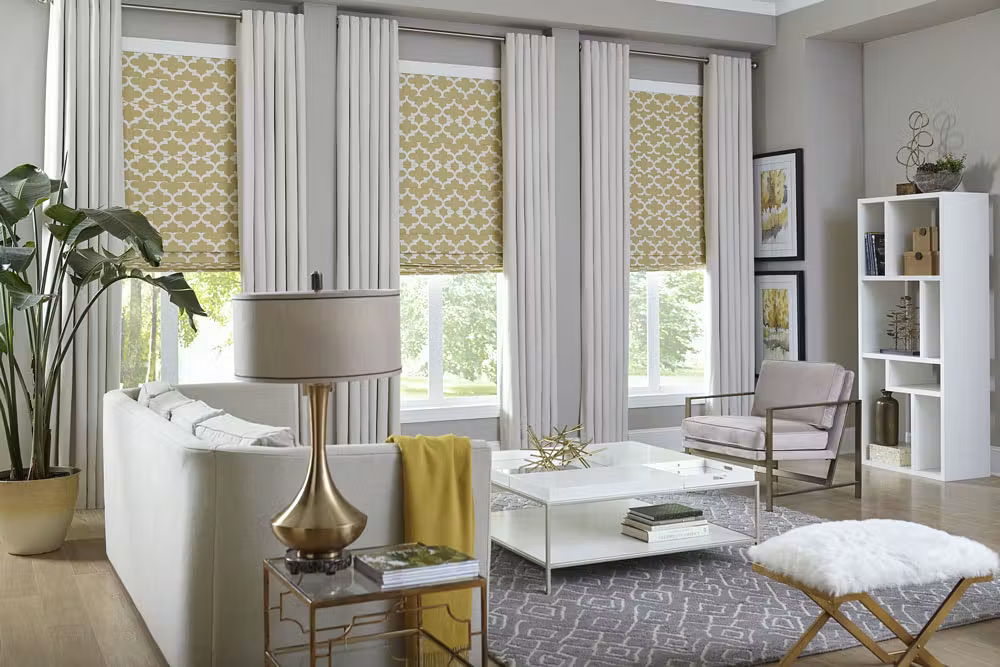
A common approach uses a lightweight sheer curtain combined with a heavier decorative curtain. This allows homeowners to enjoy natural light during the day while maintaining privacy when needed.
Window Shade Systems
Window shades provide a cleaner and more structured appearance compared with traditional curtains. They are available in different designs suitable for modern residential interiors.
Roller Shades
Roller shades are among the most popular modern window covering solutions because of their simple appearance and easy operation.
They are commonly used in:
- Bedrooms
- Offices
- Living rooms
- Modern apartments
Benefits of Roller Shades
Roller shades provide:
- Clean appearance
- Space-saving design
- Easy maintenance
- Adjustable light control
Roman Shades
Roman shades combine fabric elegance with practical functionality. They create a softer appearance compared with roller systems.
They are often selected for traditional, luxury, and classic interior designs.
Cellular Shades
Cellular shades are designed with air pockets that improve insulation performance.
They help reduce heat transfer and can contribute to improved indoor comfort.
Blind Systems for Residential Applications
Blinds provide precise control over light and privacy through adjustable slats or panels.
Venetian Blinds
Venetian blinds use horizontal slats that can be tilted to control sunlight.
They are available in materials such as:
- Aluminum
- Wood
- Composite materials
Advantages of Venetian Blinds
They provide:
- Adjustable light control
- Easy cleaning
- Modern appearance
- Flexible privacy management
Vertical Blinds
Vertical blinds use vertical panels and are commonly used for large windows and sliding glass doors.
They are suitable for:
- Living areas
- Office spaces
- Wide glass openings
Interior Design Applications of Window Coverings
Window coverings are closely connected with interior design because they influence color balance, texture, and room atmosphere.
Living Room Window Treatments
Living rooms often require window coverings that balance decoration and functionality.
Large windows may benefit from elegant curtains or layered treatments that enhance architectural features while controlling sunlight.
Bedroom Window Covering Solutions
Bedrooms usually require solutions focused on privacy and comfort.
Blackout curtains, insulated shades, and soft fabrics are commonly used to create relaxing environments.
Kitchen Window Covering Designs
Kitchen window treatments should combine practicality with easy maintenance.
Moisture-resistant materials and simple designs are often preferred because kitchens experience heat, humidity, and frequent cleaning requirements.
Smart Window Covering Technology
Technology has introduced new possibilities in residential window management.
Motorized Curtain and Shade Systems
Motorized window coverings allow homeowners to control curtains and shades automatically.
These systems can be operated through:
- Remote controls
- Mobile applications
- Voice assistants
- Smart home platforms
Benefits of Smart Window Treatments
Smart systems provide:
- Increased convenience
- Automated schedules
- Better energy management
- Improved accessibility
Choosing the Right Window Covering System
Selecting the right window covering depends on room purpose, design style, privacy requirements, and maintenance expectations.
Considering Room Requirements
Different rooms require different solutions. Bedrooms often prioritize privacy and darkness, while living rooms may focus on decoration and natural light.
Matching Interior Design Style
Window coverings should complement furniture, wall colors, flooring, and overall room design.
Modern interiors often use simple fabrics and neutral tones, while traditional designs may include detailed patterns and richer textures.
Material and Maintenance Considerations
The selected material should match the home’s lifestyle needs.
Some fabrics require regular cleaning, while others provide easier maintenance and greater durability.
Future Trends in Residential Window Coverings
The future of window coverings is moving toward smarter, more sustainable, and more personalized solutions.
Modern developments include automated systems, eco-friendly fabrics, improved insulation materials, and advanced smart home integration.
As homes become more connected, window coverings will increasingly become part of complete home automation networks that manage lighting, temperature, and privacy automatically.
Conclusion
Residential window coverings play an important role in combining interior design, comfort, privacy, and energy efficiency. From elegant curtains and practical shades to smart automated systems, modern solutions provide homeowners with flexible options for every type of living space.
Choosing the right window covering requires understanding the room purpose, design goals, material options, and functional requirements. With continuous improvements in technology and design, window coverings will continue to be an essential part of modern residential interiors.