Gabion Wall Applications for Residential Garden Boundaries and Decorative Exterior Landscape Features
A gabion wall is a wire mesh cage filled with stone, and it is one of the most versatile structures in residential landscaping. The short answer for homeowners is this: gabion walls work as garden boundaries, low retaining walls, privacy screens, planters, benches, fire pit surrounds, and water features because they are strong, permeable, and simple to build without concrete footings. They drain freely so water never builds up behind them, they flex with ground movement instead of cracking, and a well-built gabion wall can last 30 to 50 years. This guide covers applications, material choices, costs, and mistakes to avoid.
What Is a Gabion Wall?
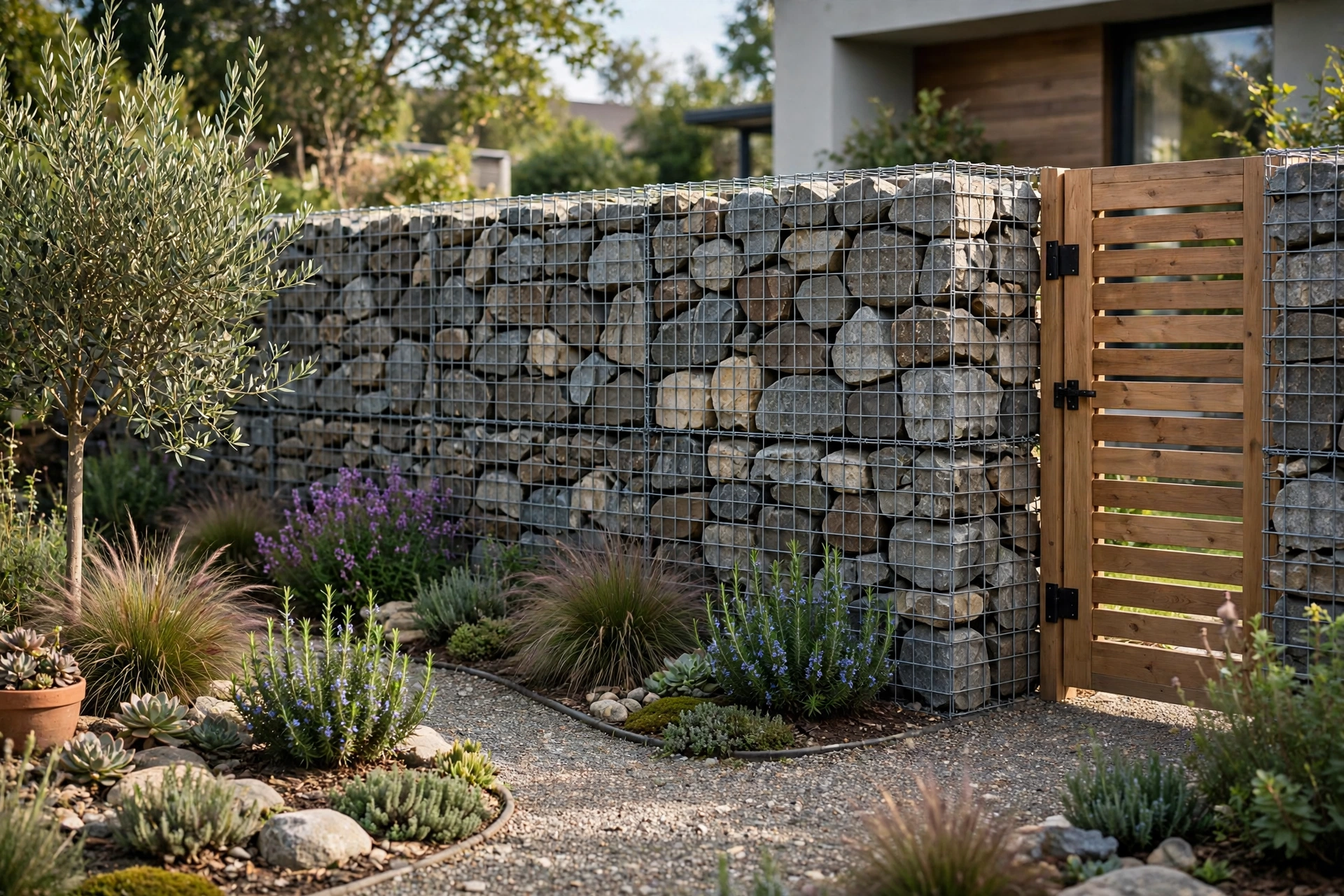
A gabion wall is made from rectangular wire mesh baskets, called gabion baskets or rock cages, filled tightly with stone. The word comes from the Italian gabbione, meaning big cage. Originally developed for erosion control, gabions have moved into residential gardens because the properties that make them reliable infrastructure also make them excellent landscape structures. Baskets arrive flat-packed and are assembled on site with spiral binders or lacing wire. The mass of the stone gives the wall its stability, so low garden walls typically need no concrete foundation. Internal bracing wires are fitted during filling to stop the mesh faces bulging.
Why Gabion Walls Suit Residential Gardens
The biggest advantage is drainage. Water passes freely through the stone fill, so no hydrostatic pressure builds up, no weep holes are needed, and there are no drainage pipes to clog. Rigid walls fail most when drainage is neglected; gabion walls avoid the problem by design. The structure also flexes with the ground, handling freeze-thaw cycles without cracking the way mortar joints do. Gabion walls are environmentally friendly too, since they can be filled with locally quarried or recycled stone. Finally, they are genuinely low maintenance: with corrosion-resistant wire, an annual visual check is usually all needed.
Gabion Wall Applications for Garden Boundaries
Garden boundaries need to be durable, attractive, and appropriate to the setting. Gabion walls satisfy all three, in several different roles.
Boundary and Property Line Walls
A freestanding gabion wall makes a distinctive property boundary. A height of 0.5 to 1 metre usually defines a boundary or separates garden rooms without blocking light. For privacy, walls can reach 1.8 to 2 metres, though taller walls need wider bases and local planning or boundary rules should be checked first. The fill can match the house colour palette, and a hand-placed stone face gives a clean, dry-stone look.
Retaining Walls for Terraces and Slopes
The most common residential application is the gabion retaining wall. Sloped gardens become flat planting or seating areas with stepped gabion walls. A practical rule is one foot of wall thickness for every two feet of retained height. Walls retaining less than 1 metre of soil are straightforward DIY using a single row of baskets. Above 1 metre, stepping baskets back as they rise improves stability. Gabion walls are especially reliable on wet or clay ground where solid walls are most at risk.
Privacy Screens and Fencing
Tall, narrow gabion panels work as textured privacy screens. Unlike a solid fence, a gabion screen has depth, and climbing plants can be trained up the wire. Slim baskets around 0.3 metres deep suit freestanding screens, sometimes combined with timber or metal posts. Mixed fills or lighting set within the fill can turn a screen into a night-time feature.
Decorative Exterior Landscape Features
Gabion baskets are among the most adaptable materials in modern landscape design. Their modular form suits almost any garden feature.
Planters and Raised Beds
Gabion planters are hugely popular. The stone fill drains well, and the basket is lined with landscape fabric to hold soil. Raised gabion beds suit kitchen gardens because the height reduces bending and the stone warms up early in spring.
Benches and Seating Walls
Low gabion walls capped with a timber sleeper or stone slab make superb benches. Around 0.45 metres high is comfortable to sit on, and the mass of stone means the seating never moves. The gabion base is weatherproof, while the cap can be refinished without disturbing the base.
Fire Pits and Outdoor Fireplaces
Circular or square gabion fire pit surrounds create a strong patio focal point. Stone and steel are naturally fire resistant, a real safety advantage over timber features. The flat wall tops double as seating-height surfaces. Check local fire regulations and keep the feature well away from fences and buildings.
Water Features and Pond Edges
Water cascading over or through the stone fill creates a natural textured waterfall, and recirculating systems built around gabions look and sound organic. Gabion baskets also make sturdy pond edging. With proper corrosion-resistant wire, constant water exposure is not a problem.
Columns, Pillars, and Accent Walls
Single gabion columns make striking gate pillars or entrance markers, and short accent walls can divide a large garden into rooms. Decorative gabions need not hold ordinary rock: shells, coloured glass, reclaimed brick, and timber slices all work if weatherproof and too large to slip through the mesh.
Choosing Baskets, Wire, and Stone
Three material decisions determine how long a gabion wall lasts and how good it looks.
Basket Types: Woven vs Welded
Woven baskets use flexible hexagonal mesh that tolerates uneven ground and suit retaining walls. Welded baskets use rigid square mesh that gives crisp, uniform faces, preferred for decorative features and visible boundaries. Either type works well for garden projects when filled and braced correctly.
Wire Coatings and Corrosion Protection
Corrosion is the main threat to a gabion wall, so the coating matters most. Options include hot-dip galvanized steel, Galfan (a zinc-aluminium alloy), and PVC-coated wire over a galvanized core. Galvanized or Galfan wire suits ordinary gardens; PVC-coated wire is strongly recommended in coastal or persistently damp positions. Cheap wire is the most common false economy in gabion projects.
Stone Selection and Fill
The best fill is hard, angular rock that interlocks and resists settling better than rounded cobbles. Stones should be roughly 1.5 to 2 times the mesh openings so they cannot escape, yet small enough to pack densely. Hand-place the best stones against the visible face and use plainer material in the core. Locally quarried stone gives the best value and a natural match.
Gabion Walls vs Other Garden Wall Options
It helps to compare gabion walls with the alternatives most homeowners consider.
How to Build a Small Gabion Garden Wall
A low boundary or decorative wall up to about 1 metre high is a realistic weekend DIY project.
Plan and mark out. Sketch dimensions, check for underground services, and mark the line with stakes and string.
Prepare the base. Remove topsoil, excavate a shallow trench, and compact a level gravel base about 10 cm deep.
Assemble the baskets. Unfold the flat-packed baskets, join panels with spiral binders or lacing wire, and link adjacent baskets.
Fit geotextile fabric. For retaining walls, place non-woven fabric against the rear face so soil cannot migrate into the stone.
- Fill in lifts of 30 cm or less. Hand-place the best stones against the visible face and pack the core tightly.
- Fit internal bracing. Install bracing wires across the basket roughly every 30 cm of height to stop bulging.
- Close the lids. Fold each lid down and secure firmly with lacing wire or spirals once the basket is full.
Stack and backfill. Step upper baskets slightly back, repeat filling, and backfill retaining walls with clean gravel, not soil.
Cost Guide for Residential Gabion Projects
Costs vary with size, stone type, wire quality, and labour rates, so treat all figures as estimates and get project-specific quotes.
The biggest DIY cost lever is the fill. Suitable local or recycled stone cuts material costs dramatically and makes the project greener. For professional work, site access is a major factor: a wall reachable only on foot costs more in labour.
Common Mistakes to Avoid
- Stone too small. Stones must be 1.5 to 2 times the mesh openings or they escape through the wire.
- No internal bracing. Without cross-ties, basket faces bulge, leaving a wavy wall.
- Filling in one go. Fill in 30 cm layers; single-lift filling causes bulging and poor compaction.
- Weak base. Build on firm, compacted ground with a gravel base or the wall settles unevenly.
- Poor wire. Plain steel rusts fast outdoors. Use galvanized, Galfan, or PVC-coated wire.
- Too tall, no step-back. Walls much above 1 metre need wider bases, stepped profiles, and often professional design.
- No geotextile. Migrating soil clogs drainage and stains the wall face.
- Ignoring regulations. Tall boundary walls may need planning permission or neighbour agreement.
Maintenance and Lifespan
A well-built gabion wall is one of the lowest-maintenance garden structures. With good wire coating, 30 to 50 years of service is commonly reported, and an annual inspection is usually enough.
- Check wire for rust, broken ties, or damage, especially after storms or heavy frost.
- Pack small angular stones into gaps left by settled fill.
- Remove self-seeded trees before roots distort the mesh.
- Check drainage behind retaining walls still flows freely.
- Refinish timber caps or seats without disturbing the baskets.
Safety and When to Call a Professional
Low gabion projects are safe DIY work, but taller and structural walls carry real risks. Call a structural engineer or experienced contractor when the wall retains more than about 1.2 metres of soil, supports a driveway or building, or stands where failure could damage property or injure someone. Professional design is also advisable near watercourses. Wear gloves handling wire mesh and stone, since cut wire ends are sharp, and lift with proper technique. Keep children away from partially built baskets, and locate underground services before digging.
Final Thoughts
Gabion walls earn their place in residential gardens by doing two jobs at once: they work hard as boundaries and retaining structures, and they look good doing it. Decide which role matters most, then choose basket type, wire coating, and stone to match. Keep DIY builds low with a solid base, and bring in professional help for anything tall or structural. Your next step: measure the line where the wall will go, sketch the height and length, and get two or three quotes for baskets and stone.
Frequently Asked Questions
How long do gabion walls last?
A well-built gabion wall with quality corrosion-resistant wire typically lasts 30 to 50 years. The stone fill lasts indefinitely. Lifespan is shortest in coastal or persistently wet spots unless PVC-coated or heavily galvanized wire is used.
Do gabion walls need a foundation?
Low garden walls up to about 1 metre need no concrete foundation, just a level, compacted gravel base. Taller or structural walls may need deeper preparation or engineering, and walls on soft clay should be excavated to firmer ground first.
Will the wire rust?
All steel wire eventually corrodes, but quality coatings slow it dramatically. Galvanized and Galfan coatings give decades of protection in normal gardens; PVC-coated wire is best near the coast or in constantly damp positions. Inspect annually.
Can I build a gabion wall myself?
Yes, low walls up to about 1 metre are realistic DIY projects. The work is straightforward but physically demanding, since hand-filling takes time and effort. For taller walls or significant retained soil, get professional help.
What stone should I use to fill gabion baskets?
Use hard, angular, frost-resistant stone at roughly 1.5 to 2 times the mesh openings. Hand-place the best stones against the visible face and use plainer material in the core. Locally quarried stone is usually best value.
Are gabion walls cheaper than brick walls?
Usually, yes. Installed gabion walls typically cost US $10 to $40 per square foot or around £240 per m² plus VAT in the UK, generally less than brick or natural stone. DIY can be cheaper still with local stone. Always get comparable quotes.
Do gabion walls need drainage behind them?
No separate drainage is needed because the wall itself drains. Water passes freely through the stone fill, so no hydrostatic pressure builds up. A geotextile fabric behind a retaining wall is still recommended to stop soil washing into the stone.