Home Acoustic Systems For Soundproof Rooms And Better Comfort
Noise has become an increasingly common challenge in modern homes. Traffic sounds, construction activity, household conversations, appliances, and outdoor disturbances can affect privacy, concentration, and overall comfort. As homes become more connected and multifunctional, creating quiet and peaceful indoor spaces has become more important than ever.
Home acoustic systems for soundproof rooms and better comfort provide advanced solutions to control unwanted noise, improve sound quality, and create more comfortable living environments. These systems combine soundproofing materials, acoustic treatments, smart audio technology, and modern design approaches to reduce noise transmission and enhance indoor experiences.
Whether it is a home theater, bedroom, office, studio, or relaxation area, effective acoustic solutions help homeowners create spaces with better privacy and improved sound performance.
The Importance Of Acoustic Design In Modern Homes
Traditional home construction often focuses on appearance, structure, and energy efficiency, but acoustic performance is becoming an equally important consideration. Poor sound control can make a home feel uncomfortable even when the interior design is attractive.
Uncontrolled noise can affect:
- Sleep quality
- Work productivity
- Privacy between rooms
- Entertainment experiences
- Overall relaxation
Modern acoustic systems address these problems by controlling how sound travels through walls, ceilings, floors, and interior spaces.
Understanding Home Acoustic Systems
A home acoustic system is a combination of materials, technologies, and design methods used to manage sound within a residential environment. These systems can reduce unwanted external noise, prevent sound from traveling between rooms, and improve the quality of audio inside a space.
A complete acoustic solution may include soundproof walls, ceiling treatments, acoustic panels, insulation materials, specialized doors, and smart audio equipment.
The goal is not only to block noise but also to create a balanced sound environment where voices, music, and entertainment are clearer and more enjoyable.
Difference Between Soundproofing And Acoustic Treatment
Although these terms are often used together, soundproofing and acoustic treatment serve different purposes.
Soundproofing For Noise Reduction
Soundproofing focuses on preventing sound from entering or leaving a room. It works by adding barriers that reduce sound transmission.
Common soundproofing methods include:
- Adding dense wall materials
- Improving insulation
- Sealing gaps around doors and windows
- Using specialized construction techniques
Soundproofing is especially important for bedrooms, home offices, recording spaces, and entertainment rooms.
Acoustic Treatment For Better Sound Quality
Acoustic treatment focuses on improving sound behavior inside a room. Instead of blocking sound, it controls reflections, echoes, and unwanted vibrations.
Acoustic treatments help create:
- Clearer conversations
- Better music quality
- Reduced echo
- More balanced sound
A room can be well soundproofed but still require acoustic treatment to achieve better sound performance.
Common Soundproofing Solutions For Home Rooms
Different areas of a home require different approaches to noise control. Modern soundproofing solutions can be customized according to room purpose and noise sources.
Soundproof Walls And Insulation Systems
Walls are one of the main paths through which sound travels. Standard walls may allow conversations, television sounds, or outside noise to pass between spaces.
Modern soundproof wall systems use specialized insulation and layered construction techniques to reduce sound transmission.
Benefits Of Soundproof Wall Systems
They help:
- Improve privacy between rooms
- Reduce outside noise
- Create quieter living spaces
- Improve home comfort
Soundproof walls are commonly installed in bedrooms, offices, home theaters, and music rooms.
Acoustic Ceiling Solutions
Sound can also travel through ceilings, especially in multi-story homes or apartment buildings.
Acoustic ceiling systems help reduce noise transfer between different levels of a building.
They can include specialized panels, insulation layers, and suspended ceiling designs that absorb and block unwanted sounds.
Soundproof Flooring Systems
Floors can transmit footsteps, furniture movement, and impact noise between rooms.
Modern flooring solutions use materials designed to reduce vibration and sound transmission.
These solutions are useful in:
- Apartments
- Multi-level homes
- Children’s rooms
- Entertainment areas
Acoustic Doors And Windows
Doors and windows are common weak points in sound control because gaps allow sound to pass easily.
Modern acoustic doors and windows are designed with improved sealing and specialized materials to reduce noise leakage.
Features Of Acoustic Doors And Windows
They often include:
- Better insulation
- Stronger sealing systems
- Multiple glass layers
- Improved frame designs
These upgrades can significantly improve room privacy and comfort.
Acoustic Panels And Interior Sound Control
Acoustic panels are among the most popular solutions for improving indoor sound quality. They absorb sound reflections and reduce echo inside rooms.
They are available in different designs, allowing homeowners to improve acoustics without affecting interior aesthetics.
Decorative Acoustic Wall Panels
Modern acoustic panels are designed to combine performance with visual appeal. They can be installed as decorative wall features while improving sound control.
These panels are commonly used in:
- Living rooms
- Home theaters
- Offices
- Studios
Benefits Of Acoustic Panels
They provide:
- Reduced echo
- Improved speech clarity
- Better sound balance
- Stylish interior enhancement
Fabric And Foam Acoustic Treatments
Fabric-wrapped panels and acoustic foam materials are commonly used in spaces where sound quality is important.
They are especially useful for:
- Recording rooms
- Gaming spaces
- Home studios
- Media rooms
These materials absorb sound energy and reduce unwanted reflections.
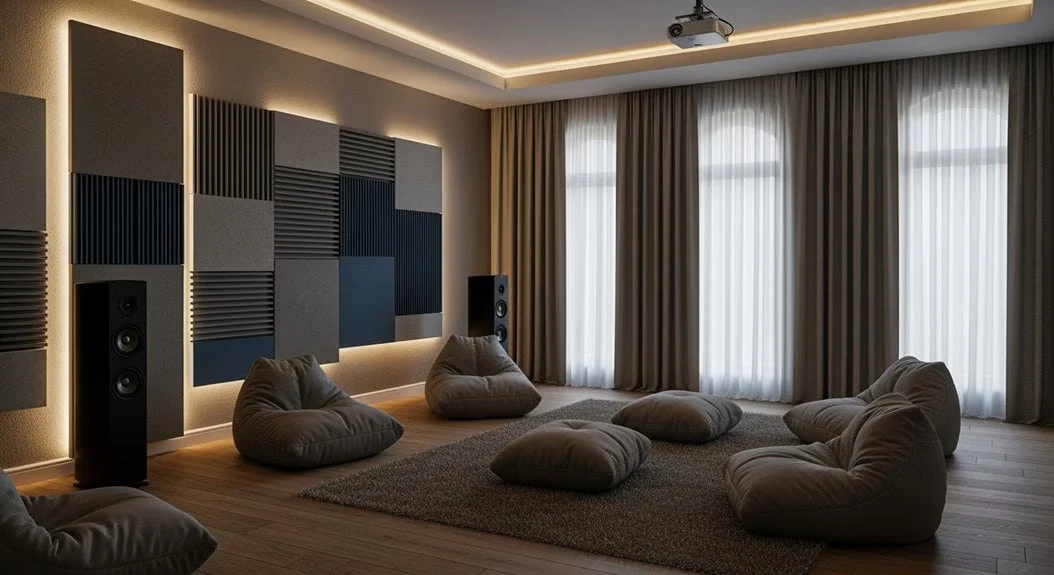
Creating A Soundproof Home Theater Experience
Home theaters require careful acoustic planning because both sound quality and noise control are important.
A good home theater acoustic system focuses on controlling sound inside the room while preventing disturbance to other areas of the house.
Important considerations include:
- Wall insulation
- Acoustic panels
- Carpet or soft flooring
- Speaker placement
- Room shape
Proper acoustic design allows viewers to enjoy movies and music with better clarity and deeper sound experiences.
Smart Audio Systems For Modern Homes
In addition to soundproofing, modern homes are increasingly using smart audio technology to improve entertainment and comfort.
Smart audio systems allow homeowners to control music, speakers, and sound settings through connected devices.
Multi-Room Audio Solutions
Multi-room audio systems allow different rooms to have independent or synchronized sound.
Homeowners can play music throughout the house or create separate audio environments for different areas.
These systems are popular in modern homes because they combine convenience with personalized entertainment.
Voice-Controlled Audio Technology
Smart speakers and voice assistants allow users to control audio systems without physical controls.
Homeowners can adjust volume, change music, or manage connected devices using voice commands.
Designing Acoustic Solutions For Different Rooms
Each room has different acoustic requirements depending on its purpose.
Bedroom Acoustic Design
Bedrooms benefit from soundproofing because noise can affect relaxation and sleep quality.
Common solutions include:
- Soundproof windows
- Insulated walls
- Soft furnishings
- Acoustic curtains
These improvements help create a quieter and more peaceful sleeping environment.
Home Office Acoustic Solutions
With remote work becoming more common, home offices require better sound control for concentration and online communication.
Acoustic improvements can reduce distractions and improve clarity during virtual meetings.
Living Room Sound Management
Living rooms often serve multiple purposes, including entertainment and family activities.
Balanced acoustic design helps reduce echo while maintaining a comfortable atmosphere for conversations and media use.
Benefits Of Professional Acoustic Installation
While some acoustic products can be installed easily, professional planning often provides better results.
Experts can evaluate room structure, identify sound problems, and recommend suitable solutions.
Professional acoustic installation helps achieve:
- Better noise reduction
- Proper material selection
- Improved sound balance
- Long-term performance
Future Of Home Acoustic Technology
The future of residential acoustic systems is moving toward smarter and more integrated solutions.
Advanced technologies are expected to include intelligent sound management systems that automatically adjust room acoustics based on activities.
Future developments may include:
- AI-based acoustic optimization
- Smart soundproof materials
- Adaptive audio systems
- More sustainable acoustic products
These innovations will help homeowners create spaces that automatically adapt to comfort and entertainment needs.
Conclusion
Home acoustic systems play an important role in creating comfortable, private, and enjoyable living spaces. Modern solutions combine soundproof construction methods, acoustic treatments, smart audio technology, and innovative materials to control noise and improve sound quality.
Whether the goal is creating a quiet bedroom, a productive home office, or a high-quality entertainment room, effective acoustic design can significantly improve the way a home feels and functions.
As residential technology continues to evolve, smart acoustic solutions will become an essential part of modern home design, helping homeowners enjoy greater comfort, privacy, and control over their living environments.
Frequently Asked Questions (FAQs)
What is a home acoustic system?
A home acoustic system is a combination of soundproofing materials, acoustic treatments, and audio technologies designed to control noise and improve sound quality inside residential spaces. These systems help reduce unwanted noise while creating a more comfortable and balanced indoor environment.
What is the difference between soundproofing and acoustic treatment?
Soundproofing focuses on preventing sound from entering or leaving a room by using barriers such as insulated walls, special doors, and sound-resistant materials. Acoustic treatment improves the quality of sound inside a room by reducing echoes, reflections, and unwanted vibrations.
Can soundproofing completely block outside noise?
No soundproofing system can usually block all noise completely, but a properly designed system can significantly reduce unwanted sounds. The level of noise reduction depends on factors such as wall construction, materials used, windows, doors, and installation quality.
Which rooms benefit most from acoustic treatment?
Acoustic treatment is useful in many areas of a home, especially rooms where privacy and sound quality are important. Common applications include home theaters, bedrooms, home offices, gaming rooms, recording studios, and living rooms.
What materials are commonly used for home soundproofing?
Common soundproofing materials include acoustic insulation, soundproof drywall, mass-loaded vinyl, acoustic panels, specialized doors, and sound-resistant windows. The right material depends on the type of noise problem and the room structure.
Do acoustic panels reduce noise coming from outside?
Acoustic panels mainly improve sound quality inside a room by reducing echoes and sound reflections. They do not completely block outside noise. For external noise reduction, soundproofing methods such as insulation, sealed windows, and wall treatments are usually required.
How can I make my bedroom quieter?
A quieter bedroom can be created by combining different acoustic solutions such as soundproof windows, insulated walls, heavy curtains, carpets, acoustic panels, and proper sealing around doors and openings.
Are home acoustic systems useful for home offices?
Yes, acoustic systems are highly beneficial for home offices. They reduce distractions, improve speech clarity during online meetings, and create a more focused working environment.
Can acoustic solutions improve a home theater experience?
Yes, acoustic treatments can greatly improve home theater performance by reducing echoes, improving sound clarity, and creating a more immersive audio experience. Proper placement of acoustic panels, speakers, and soundproofing materials helps achieve better results.
Are acoustic panels suitable for modern interior designs?
Yes, modern acoustic panels are available in various colors, textures, and designs. Many options are created to function as decorative wall features while improving sound performance.
Do smart audio systems work with home acoustic solutions?
Yes, smart audio systems can be combined with acoustic treatments to create better entertainment experiences. Soundproofing reduces unwanted noise, while smart audio technology improves control over music, speakers, and connected devices.