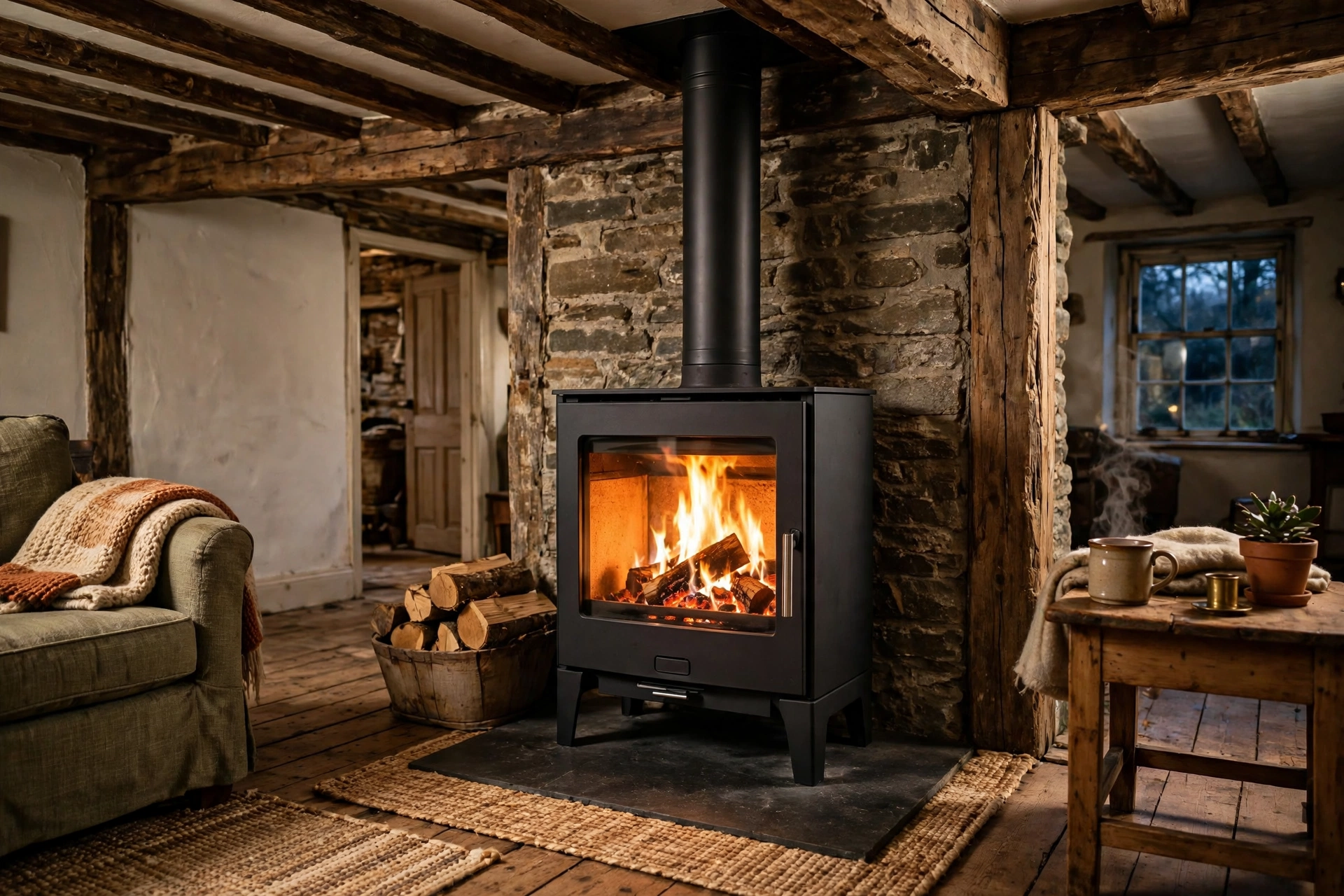
Modern Residential Wood Stove Installation Methods for Safe Supplemental Heating in Older Homes and Improved Energy Efficiency
A wood stove can transform an older home. It provides steady, comfortable heat, it keeps working when the power goes out, and it can cut heating bills significantly when used as a supplemental heat source. But installing one in an older home is not a simple appliance purchase. Old houses often have unlined chimneys, tight rooms, combustible walls close to the stove, and timber floors that need protection. Every one of those details is governed by safety codes, and getting them wrong creates a real fire risk.
The short answer is that a safe wood stove installation in an older home follows a fixed order: choose an EPA-certified stove sized to the space, get a permit, verify clearances to combustibles, protect the floor with a proper hearth, line or build a code-compliant chimney, and have the finished installation inspected before the first fire. This guide explains each step, including the clearance rules that surprise most homeowners, and shows where a professional installer is not optional.
Why a Wood Stove Fits Older Homes — and Where It Gets Complicated
Older homes and wood stoves suit each other for a simple reason: many older homes were built around a fireplace or a stove, and their rooms are sized for radiant heat. A modern EPA-certified stove burns far more cleanly than the open fireplaces those houses were built with, and it delivers heat where it is needed rather than sending most of it up the chimney. In a power cut, a wood stove keeps the house warm without electricity, which is a genuine advantage in rural areas and in regions with unreliable winter power.
- Radiant heat suits the room sizes and layout of many older homes.
- A wood stove heats during power cuts, unlike a furnace or heat pump.
- Unlined chimneys, tight rooms, and timber floors are the main complications to solve.
What NFPA 211 Clearances Mean for an Older Home's Rooms
Clearances are the minimum distances between the stove, its stovepipe, and any combustible material, and they are the single most important safety rule in wood stove installation. The governing standard is NFPA 211, the Standard for Chimneys, Fireplaces, Vents, and Solid Fuel-Burning Appliances. For an unprotected combustible wall, the standard clearance from the stove is 36 inches. That distance prevents radiant heat from slowly raising the temperature of wood framing and drywall to the point where it can ignite, a process that can take months or years of repeated heating.
| Component | Unprotected clearance | With approved protection |
|---|---|---|
| Stove to combustible wall | 36 inches | 18 inches with heat shield |
| Single-wall stovepipe to wall | 18 inches | 6 inches with double-wall pipe |
| Stove to furniture and curtains | 36 inches | Maintain the same distance |
| Hearth pad in front of door | 16 to 18 inches | Required in all cases |
Choosing an EPA-Certified Stove Sized to Your Older Home
Modern wood stoves carry two certifications that matter: a UL listing, which confirms the stove was tested and approved for residential use, and EPA certification, which confirms it meets emission standards. Stoves manufactured after 2020 must meet an emission limit of 2.0 grams of smoke per hour or less. Older stoves without these certifications may be declined by some insurers, and they burn less efficiently, producing more creosote and more smoke for the same heat.
Stove type matters too. Non-catalytic stoves are simpler and cheaper, using secondary combustion to burn smoke before it leaves the firebox. Catalytic stoves use a catalyst to burn smoke at lower temperatures, which gives longer, steadier burns and higher efficiency, but the catalyst needs periodic replacement. For an older home used as a primary or serious supplemental heat source, a catalytic stove often pays for itself in fuel savings; for occasional use, a non-catalytic stove is simpler to own.
| Home size | Typical stove output | Notes for older homes |
|---|---|---|
| Up to 1,000 sq ft | 30,000 to 40,000 BTU per hour | Small stove, single room or open plan |
| 1,000 to 2,000 sq ft | 40,000 to 60,000 BTU per hour | Most common size for older homes |
| Over 2,000 sq ft | 60,000 BTU per hour or more | Consider two stoves or a central system |
Permits, Insurance, and Inspection Before the First Fire
Almost every jurisdiction requires a building permit and a final inspection for a solid-fuel appliance, and installing a wood stove without one can void a home insurance policy. The permit process is not a formality: the inspector verifies the clearances, the chimney, the hearth, and the installation against the local code, and the inspection report is the document an insurer asks for. A homeowner who skips the permit and later has a chimney fire may find the claim denied, which is a far higher cost than the permit fee.
The inspection sequence is simple: permit first, installation second, final inspection third, and first fire only after the inspection passes. A certified installer, ideally one certified by the National Fireplace Institute, will handle the permit and schedule the inspection as part of the job. A homeowner installing the stove themselves should contact the local building department before buying anything, because the local requirements may be stricter than the national standard, and discovering that after the stove is installed is an expensive mistake.
Hearth Pads and Floor Protection for Old Timber Floors
A wood stove needs a non-combustible floor protector, known as a hearth pad, beneath and around it. The pad must extend at least 16 to 18 inches in front of the loading door, to catch stray sparks and embers, and at least 8 inches on the sides and rear. The material must have an appropriate thermal resistance value to protect combustible flooring underneath from heat transfer, which is particularly important over old timber floors that may be drier and more flammable than modern subflooring.
Chimney Options: Lining an Old Masonry Flue or Building New
The chimney is the most critical part of a wood stove installation, and in an older home it is usually the part that needs the most work. A masonry chimney must be free of cracks, deteriorated mortar joints, and obstructions before it can be used. Many older chimneys were built without any liner, or with clay tile liners that have cracked over decades of use. An unlined chimney allows heat to transfer directly to the surrounding framing, and cracks in a liner provide pathways for flames and hot gases to reach combustible materials. A wood stove should never be connected to an unlined, single-brick chimney.
Wood Stove Installation Steps From Delivery to First Burn
A wood stove installation follows a fixed sequence, and each step depends on the one before it. The order below is the same whether the work is done by a professional or by a capable homeowner, and it is worth following exactly, because skipping a step creates a hazard that may not be visible until the stove is in use.
- Obtain the building permit and confirm the local code requirements with the building department.
- Choose the stove location, measure clearances to all combustibles, and install any required heat shields.
- Install the hearth pad, checking that it is level and extends the required distance in all directions.
- Inspect and clean the chimney, install the stainless steel liner, or build the Class A chimney.
- Set the stove in place, connect the stovepipe to the chimney, and seal every joint.
- Schedule the final inspection and light the first fire only after the installation passes.
Heat Shields and Wall Protection That Shrink Clearances Safely
Heat shields are the most useful tool for fitting a wood stove into a smaller room in an older home. An approved heat shield, typically a sheet of non-combustible material such as cement board or sheet metal mounted on spacers with a one-inch air gap behind it, reduces the required clearance from 36 inches to 18 inches. The air gap is essential: it allows air to circulate behind the shield and carry heat away, and a shield mounted flat against the wall without an air gap does not provide the same protection.
The shield must be sized correctly. It should extend at least 20 inches beyond the stove on each side and above the top of the stove, so that radiant heat cannot reach the wall around its edges. The spacers must be non-combustible, and the shield must be mounted so that air can enter at the bottom and exit at the top. Some stoves come with factory-fitted rear heat shields, which achieve the same reduction and are tested as part of the stove's listing.
Burning Efficiently and Keeping Creosote Under Control
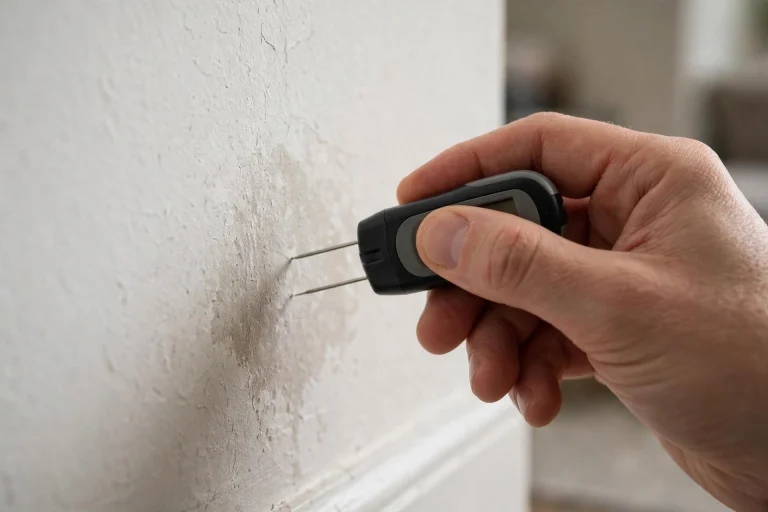
A modern EPA-certified stove is efficient only if it is operated correctly, and the most important factor is the fuel. Wood should be seasoned for at least six months, ideally a year, until its moisture content is below 20 percent. Burning wet wood produces more smoke, less heat, and far more creosote, which is the flammable tar that condenses on the inside of the flue and causes chimney fires. A moisture meter, which costs very little, is the simplest way to check firewood before it goes into the stove.
Wood Stove Installation FAQs for Older Homes
Do I need a permit to install a wood stove myself?
Almost always, yes. Most towns require a building permit and a final inspection for solid-fuel appliances. The permit protects your insurance coverage, and the inspection verifies that the clearances, chimney, and hearth meet the local code. Contact the local building department before buying the stove.
What is the minimum clearance from a wood stove to a combustible wall?
It depends on the stove and the pipe. The NFPA 211 standard is 36 inches from the stove to an unprotected combustible wall, and 18 inches for single-wall stovepipe. An approved heat shield can reduce the stove clearance to 18 inches, and double-wall pipe can reduce the pipe clearance to 6 inches. Always follow the clearance plate on your specific stove.
Can I connect a wood stove to my existing masonry chimney without a liner?
It is highly discouraged and usually against code. Old unlined chimneys are often too large to draw properly, which causes heavy creosote buildup, and cracked mortar joints can let toxic gases leak into the living space. A stainless steel liner, sized to the stove's flue outlet, is effectively non-negotiable for safety.
How big should the hearth pad be in front of the stove?
In the United States, the standard is at least 16 inches of spark protection in front of the door opening and 8 inches on the sides and rear. The pad must be non-combustible and have the thermal resistance value specified by the stove manufacturer, to protect the floor beneath from heat transfer.
Will a wood stove affect my home insurance?
Most carriers will cover a home with a wood stove, but they require evidence of proper installation, adequate clearances, and regular maintenance, and some add a premium surcharge of roughly 5 to 15 percent. Many require a CSIA-certified chimney inspection before issuing coverage or at renewal.
How often should the chimney be cleaned?
At least once a year, before the burning season, by a CSIA-certified sweep. If the stove is used heavily, or if the wood is not fully seasoned, cleaning twice a year is sensible. A Level 2 inspection with video scanning is required after any change to the venting system or when the property changes ownership.
Final Thoughts: Safe Supplemental Heat for an Older Home
A wood stove in an older home is one of the most satisfying heating upgrades a homeowner can make, but it is also one where shortcuts have real consequences. The rules are not arbitrary: the 36-inch clearance, the lined chimney, the hearth pad, and the final inspection all exist because people learned, sometimes the hard way, what happens when they are skipped. An EPA-certified stove, sized correctly, installed to NFPA 211, connected to a lined chimney, and inspected before its first fire will heat an older home efficiently and safely for decades. Do the preparation properly, burn seasoned wood, and have the chimney cleaned every year, and the stove will be the warm heart of the house rather than a worry in the back of your mind.