Backyard Pergola Designs That Create Comfortable Outdoor Shade and Entertaining Areas
A backyard should be more than an open space behind the house. With thoughtful planning, it can become a relaxing retreat, an outdoor dining area, or a comfortable place to entertain friends and family. However, excessive sunlight, limited privacy, and unpredictable weather often make outdoor areas less enjoyable.
Backyard pergolas offer a practical solution by combining architectural style with flexible outdoor shade. These attractive structures can define seating areas, support climbing plants, and create inviting spaces without requiring a fully enclosed outdoor room.
Whether installed over a patio, beside a swimming pool, or in a quiet garden corner, a well-designed pergola can improve backyard functionality while complementing the home’s exterior.
What Makes a Pergola Different From Other Outdoor Shade Structures?
A pergola is an outdoor structure typically supported by posts and covered with overhead beams, rafters, or adjustable shade elements.
Unlike a traditional gazebo, which usually features a complete roof, a conventional pergola has an open or partially covered top.
This design allows air to circulate while creating a defined outdoor space.
Modern pergolas are available in several configurations, including freestanding garden structures, attached patio extensions, and adjustable louvered systems.
The level of shade depends on the roof design, slat orientation, location, and time of day.
Some pergolas provide filtered sunlight, while others incorporate retractable canopies or specialized roofing systems for greater weather protection.
Choosing the right configuration requires balancing appearance, comfort, maintenance, and the intended purpose of the space.
Design Inspiration: Six Pergola Styles for Modern Backyards
1. Minimalist Metal Pergola
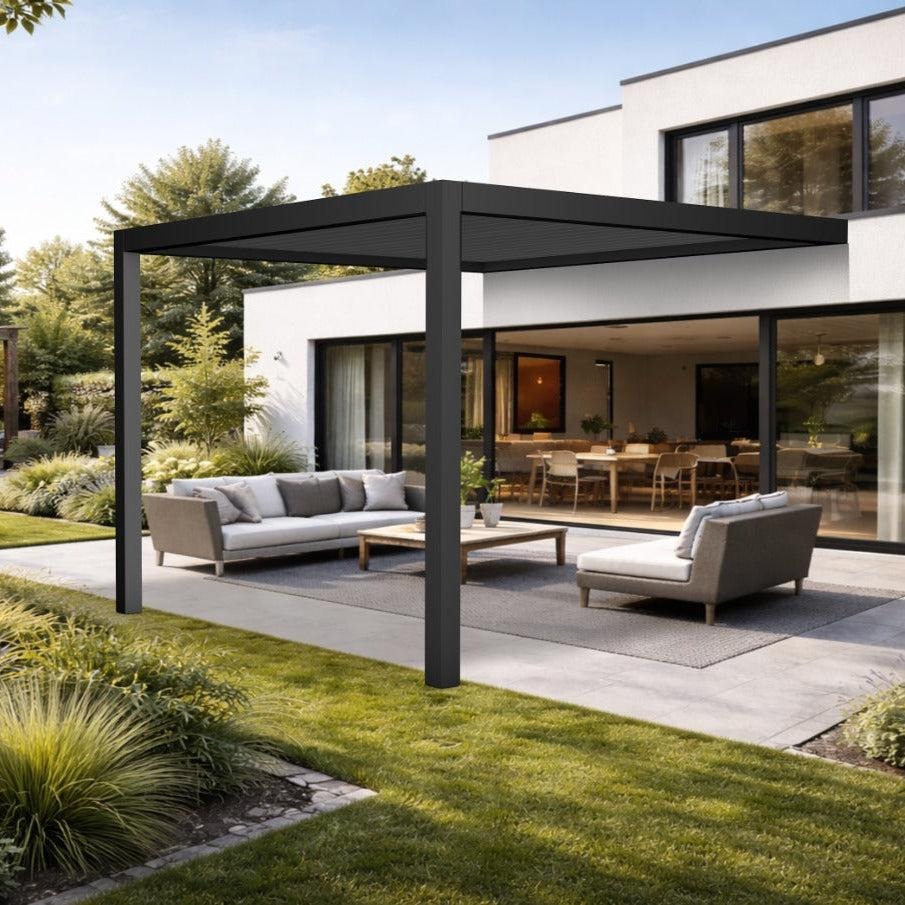
A sleek aluminum pergola with straight lines and slim posts complements contemporary homes. Black, charcoal, and neutral finishes create architectural definition without overwhelming smaller backyards.
Aluminum also requires relatively little maintenance compared with unfinished wood.
2. Natural Wood Garden Pergola
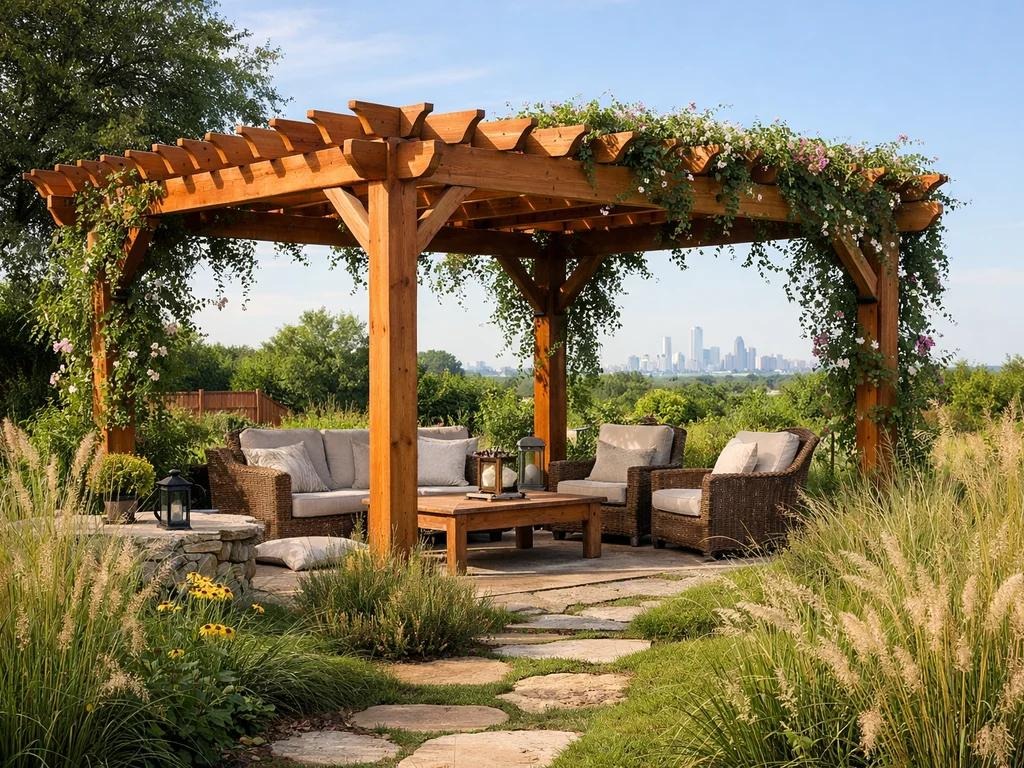
Cedar and other suitable exterior woods create a warm, organic appearance. Natural wood combines beautifully with garden landscaping, stone pathways, and comfortable outdoor seating.
Regular finishing and inspection help protect exposed timber from moisture and sunlight.
3. Attached Patio Pergola
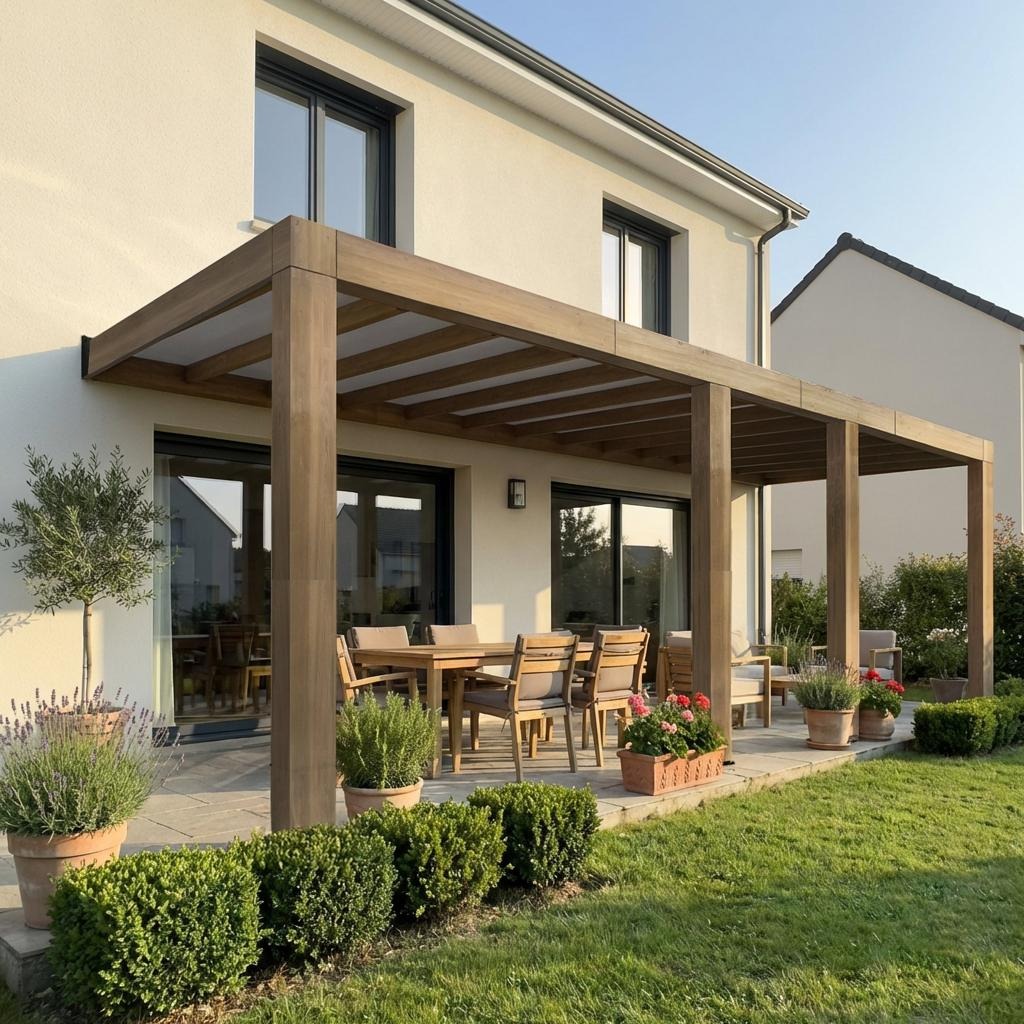
An attached pergola visually connects the backyard with the home’s interior, making it useful for outdoor dining and everyday relaxation.
Proper structural connections, waterproof flashing, and building-code compliance are particularly important for attached designs.
4. Retractable Canopy Pergola
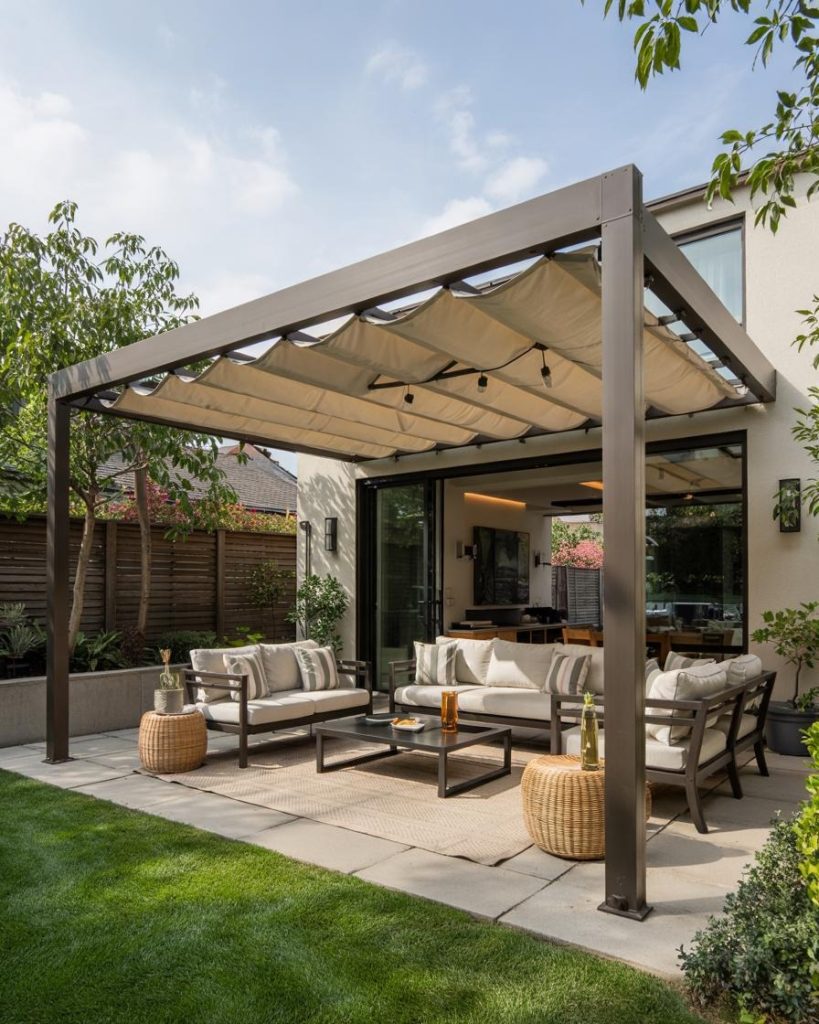
A retractable fabric canopy gives homeowners greater control over sun exposure. The cover can be extended during bright afternoons and opened when more natural light is desired.
Choose an exterior-rated canopy with suitable wind and weather specifications.
5. Plant-Covered Pergola
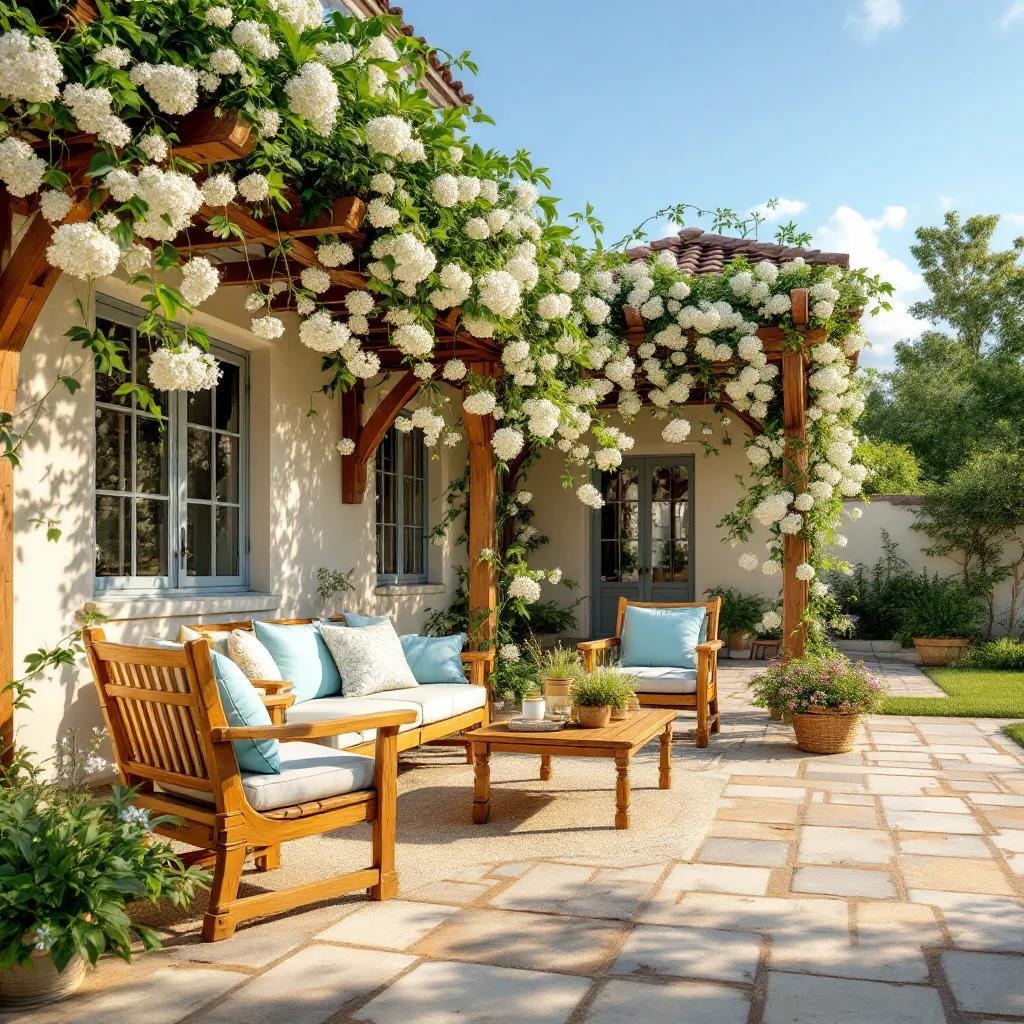
Climbing vines soften the structure and introduce natural greenery. Suitable plants can create seasonal shade and make the pergola feel integrated with the surrounding garden.
Plant selection should account for local climate, mature weight, maintenance, and potential damage to the structure.
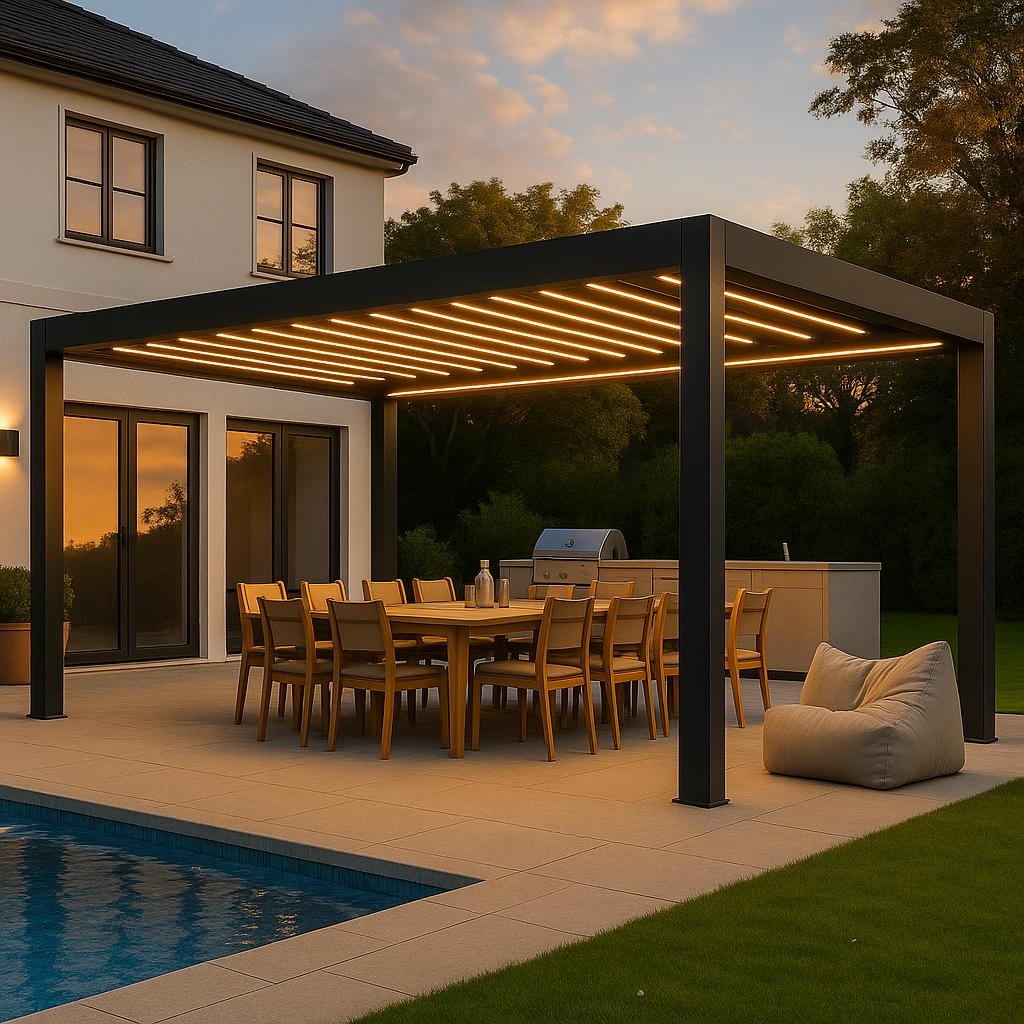
6. Adjustable Louvered Pergola
Modern louvered systems use rotating overhead panels to manage sunlight and ventilation. Some models also provide rain protection when fully closed.
These designs are generally more expensive but offer greater control over changing outdoor conditions.
Planning Pergola Placement for Maximum Comfort
Location plays a major role in how effectively a pergola improves backyard comfort.
An attractive structure may provide disappointing shade if its position ignores the sun’s movement.
Before selecting an installation site, observe how sunlight reaches the backyard throughout the day.
West-facing locations often receive intense afternoon sunlight, particularly during warmer months.
A pergola with adjustable shade elements or additional side screening may be useful in these areas.
Consider nearby windows, exterior doors, garden pathways, and landscaping.
A pergola should support natural movement between the house and outdoor spaces rather than obstruct circulation.
Homeowners should also check for underground utility lines, drainage systems, and potential conflicts with tree roots before construction.
Choosing between attached and freestanding designs
Attached pergolas work well when the objective is to extend an existing patio.
Freestanding pergolas provide greater flexibility and may be positioned near gardens, pools, or secluded seating areas.
The best choice depends on available space, structural requirements, and how the backyard will be used.
Selecting Pergola Materials That Balance Cost and Durability
Material selection influences appearance, maintenance requirements, and long-term performance.
| Material | Main advantage | Maintenance needs | Design character |
| Cedar | Natural warmth and outdoor suitability | Periodic cleaning and finishing | Rustic or traditional |
| Pressure-treated lumber | Often economical | Inspection and protective finishing | Versatile |
| Aluminum | Corrosion resistance and low maintenance | Occasional washing | Modern |
| Steel | Strength and slender structural profiles | Coating and corrosion inspection | Industrial |
| Vinyl | Generally low maintenance | Cleaning and component checks | Clean, traditional |
Wood remains popular for homeowners who prefer natural textures and flexible customization.
Aluminum works particularly well for contemporary backyards because powder-coated finishes can provide durable color with relatively little upkeep.
Steel may be suitable for larger structures, but proper corrosion protection is essential.
Regardless of the material, posts, beams, connections, and foundations must be designed for applicable wind, snow, and other structural loads.
Creating an Outdoor Dining Area Under a Pergola
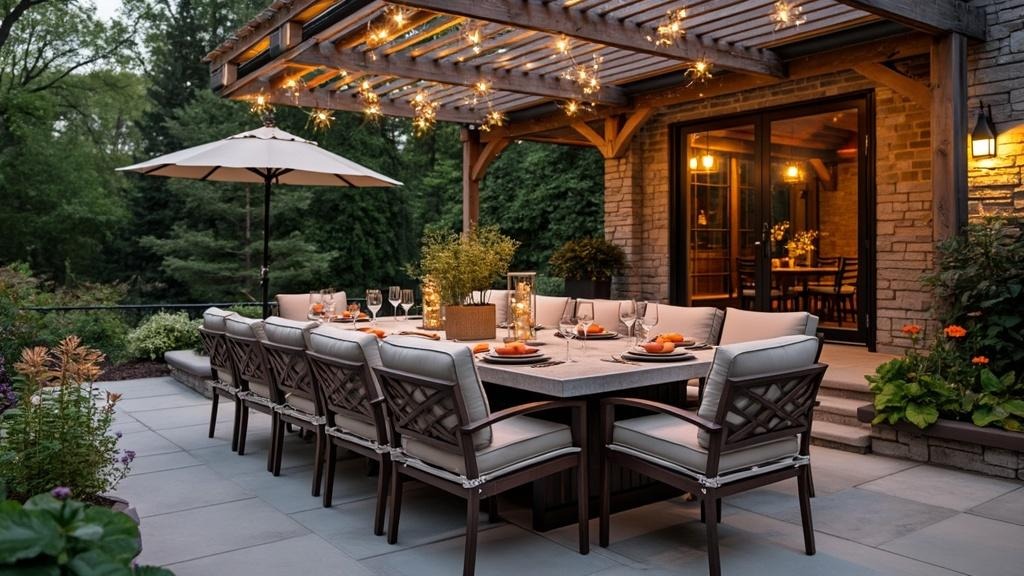
Outdoor dining is one of the most practical uses for a backyard pergola.
A properly sized structure can define a dedicated dining zone while allowing fresh air and garden views.
Begin by choosing a table appropriate for the household and anticipated guests.
Leave sufficient circulation space around chairs so people can move comfortably when others are seated.
A six-person dining table generally needs more surrounding space than its tabletop dimensions alone suggest.
For flooring, consider existing concrete, exterior pavers, or appropriately constructed decking.
The surface should be stable, reasonably level, and suitable for outdoor furniture.
Add washable seat cushions and a coordinated outdoor rug where appropriate to improve comfort.
Lighting can extend usability into the evening, while nearby access to the kitchen makes serving meals more convenient.
Turning a Pergola Into a Cozy Outdoor Living Room
A pergola does not need to be reserved for dining.
It can also become a comfortable outdoor lounge furnished with weather-resistant sofas, armchairs, and low tables.
Arrange seating to encourage conversation rather than simply positioning every chair toward the house.
Sectional furniture works well in larger spaces, while two compact lounge chairs and a small table may be better for narrow patios.
Choose fabrics specifically designed for outdoor exposure.
Neutral upholstery can create a timeless appearance, while patterned cushions introduce personality without requiring permanent design changes.
A suitable outdoor rug helps visually define the lounge area.
For additional comfort, include movable side tables and storage for cushions when the area is not in use.
Avoid placing combustible furniture or decorative materials too close to outdoor heaters, grills, or fire features.
Adding Privacy Without Making the Backyard Feel Enclosed
Shade is important, but many homeowners also want protection from neighboring views.
Pergolas can support privacy-enhancing features without requiring solid walls.
Vertical wooden slats provide a contemporary appearance and can screen selected sightlines.
Outdoor curtains introduce softness and can be opened or closed as needed.
Decorative privacy screens are another option, particularly along property-facing sides.
Climbing plants supported by appropriate trellises may create natural screening over time.
However, privacy features can increase wind loads on the structure.
Curtains, panels, and screens should be compatible with the pergola’s design and secured according to the manufacturer’s requirements.
The most comfortable arrangements maintain airflow while providing visual separation where it is needed.
How Pergola Roof Designs Affect Shade
Not every pergola provides the same level of sun protection.
An open-beam structure creates patterned shade but allows substantial sunlight through.
Closely spaced slats increase coverage, although their effectiveness changes with solar angle.
Fabric canopies offer more continuous overhead shade when deployed.
Adjustable louvers allow users to modify exposure throughout the day.
Pergola shade comparison
| Open rafters | Filtered, shifting shade |
| Closely spaced slats | Greater partial shade |
| Retractable canopy | Adjustable overhead coverage |
| Louvered roof | Adjustable sunlight control |
| Climbing vegetation | Seasonal, variable shade |
For areas exposed to strong summer sunlight, overhead shade alone may be insufficient.
Side-mounted shade screens can help reduce low-angle sunlight during early mornings and late afternoons.
Always choose products suitable for outdoor conditions and follow wind-related operating restrictions.
Outdoor Lighting Ideas That Make Pergolas More Inviting
Thoughtful lighting allows homeowners to enjoy pergolas after sunset.
Warm-toned string lights can establish a relaxed atmosphere, particularly above outdoor dining areas.
Low-voltage landscape lighting may highlight nearby planting beds and walkways.
Wall-mounted fixtures can provide illumination for attached pergolas, while appropriately rated pendant fixtures may work in suitable covered installations.
Lighting should support activities without creating glare.
For example, dining areas benefit from practical illumination over the table, while lounge spaces often look better with softer surrounding light.
All electrical fixtures must be rated for their installation environment.
Outdoor wiring, grounding, and ground-fault protection should follow applicable electrical requirements.
Use a qualified electrician when permanent electrical work is involved.
Budget-Friendly Pergola Improvements
A comfortable pergola does not require expensive accessories or complicated structural features.
Homeowners can prioritize elements that directly improve usability.
For an existing pergola, affordable improvements may include replacing worn cushions, adding weather-resistant curtains, introducing potted greenery, or updating exterior lighting.
A fresh wood finish can also improve the appearance of an aging structure.
Instead of purchasing numerous decorative items, focus on comfortable seating and effective shade.
If building a new pergola, a simple rectangular design may be more economical than a complex custom configuration.
Standard material sizes and straightforward construction details can sometimes reduce waste and labor.
However, reducing construction costs should never involve undersized structural components or inadequate foundations.
Common Pergola Design Mistakes to Avoid
One common mistake is constructing a pergola without considering actual sun exposure.
A beautiful open-roof design may provide very little relief during the hottest part of the afternoon.
Another mistake is selecting a structure too small for the intended furniture arrangement.
Pergola dimensions should account for seating, circulation, and surrounding landscaping.
Poor drainage is another concern. Water collecting around posts and foundations can contribute to premature deterioration.
Homeowners should also avoid placing wooden posts directly into unsuitable ground conditions without an approved foundation detail.
Attached pergolas require especially careful planning because improper connections can damage the home’s exterior or create structural hazards.
Before construction, check local permit requirements, property setbacks, and applicable building regulations.
Maintaining a Pergola Through Changing Seasons
Regular maintenance helps preserve the appearance and reliability of an outdoor pergola.
Inspect timber for cracking, decay, and loose connections.
Clean aluminum and vinyl surfaces using manufacturer-approved products.
Check steel components for coating damage and corrosion.
Remove accumulated leaves and debris from overhead structures.
Retractable fabrics should be cleaned and stored or secured as directed by their manufacturers.
After severe weather, inspect posts, anchors, and connections for visible damage.
Trim climbing plants before excessive growth places unnecessary weight on rafters.
Seasonal inspections can reveal small problems before they become expensive repairs.
Final Thoughts
Backyard pergola designs offer a flexible way to improve outdoor shade, privacy, and entertainment space while adding architectural character to the home.
Minimalist aluminum pergolas create contemporary appeal, natural wood structures introduce warmth, and retractable canopy systems provide adjustable comfort. With suitable furniture, lighting, privacy screens, and landscaping, a simple pergola can become an inviting outdoor dining room or relaxing backyard retreat.
The most successful designs consider sunlight, available space, structural safety, material durability, and everyday usability.
By choosing a pergola that complements the home and supports the intended activities, homeowners can create a comfortable outdoor environment that remains attractive and functional throughout the seasons.