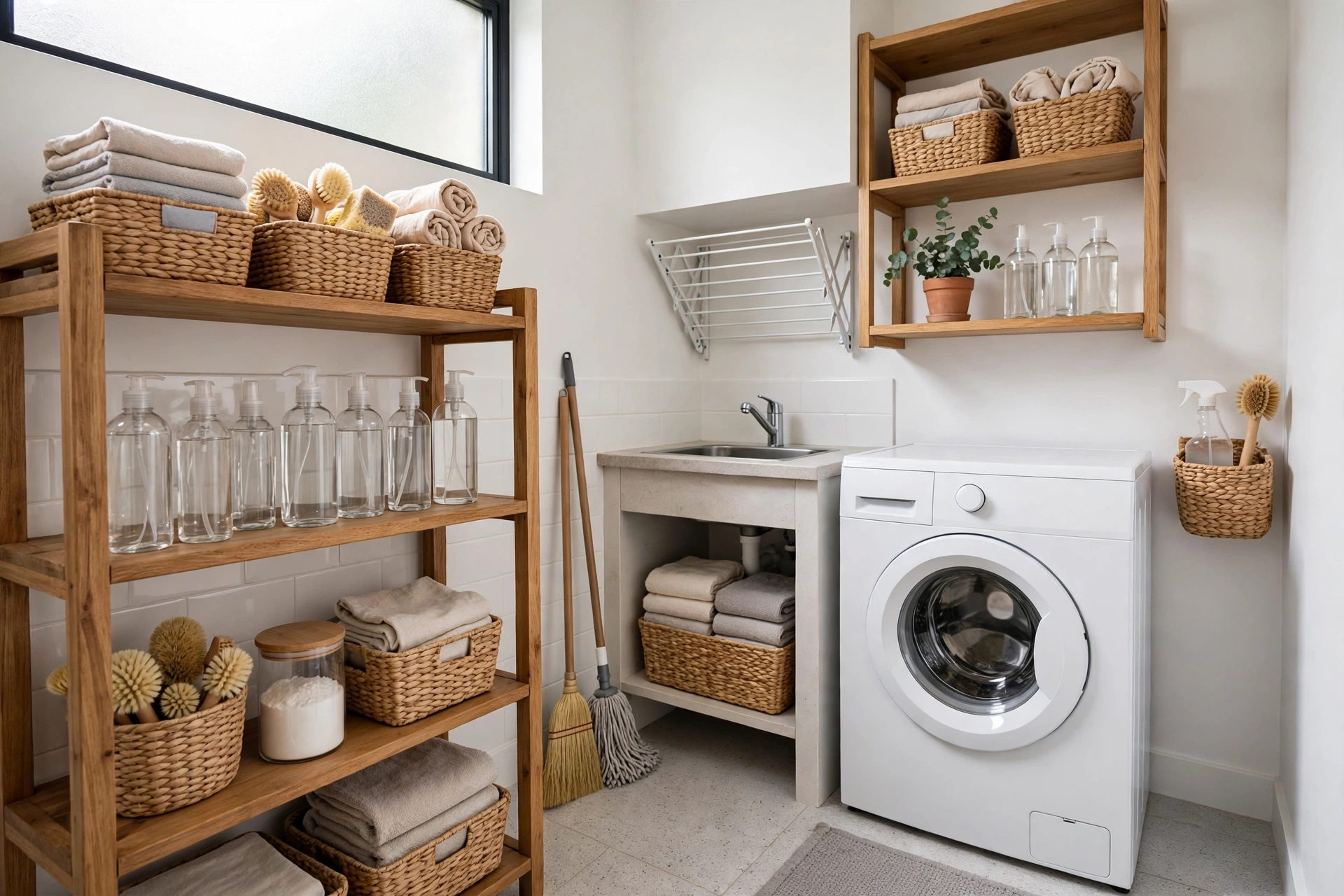
Clever Ways to Organize Cleaning Supplies Inside Small Utility Rooms and Laundry Areas
A small utility room fails in a very specific way. It is not that there is too little space, exactly. It is that everything lands in one pile: detergent next to drain cleaner, clean cloths under a leaking bottle, the thing you need daily buried behind the thing you use twice a year. Then the door barely closes, and everyone in the house starts leaving supplies on the kitchen counter instead, which defeats the whole point of having a utility room.
The fix is not a bigger room or a shopping spree at a storage store. It is deciding where things live before you buy a single bin, and then giving the busiest supplies the best spots. A utility room the size of a cupboard can work beautifully once every bottle has a home and the home matches how often you reach for it. This guide sets up that system, then shows you how to keep it working when real life starts messing it up again.
Sort by Task Before You Buy a Single Bin
Take everything out of the room first. Yes, everything, including the bottles at the back that you have been avoiding. Lay it on the floor or the kitchen table and sort it by what it does, not by what it looks like. Laundry supplies in one group, surface cleaners in another, floor care in a third, and the oddments, spare sponges, gloves, cloths, in a fourth. You will find duplicates, things you bought twice because you could not see the first bottle, and at least one product you stopped using years ago. Throw away the expired and the empty, and put the duplicates where you can see them so you stop buying a third.
How the Three-Zone System Works in a Room the Size of a Cupboard
Once you know what you own, divide the room into three zones by how often you reach for things. The daily zone is everything you touch every wash day or every clean: detergent, stain spray, the cloths you actually use, rubber gloves. The weekly zone holds the things you use once a week or so: floor cleaner, glass spray, the vacuum attachments. The monthly zone is backstock and rarely used items: refill bottles, spare sponges, the grout cleaner you use twice a year. Daily things live at waist to eye height, within one step of where you use them. Weekly things go on a higher shelf or a lower one. Monthly things go up high or right at the bottom, out of the way.
Stand where you do the laundry or the cleaning and reach out without moving your feet. That is your daily zone, and it is smaller than you think.
Put the daily supplies there first, in the order you use them, left to right if you are right-handed. Detergent, then stain treatment, then softener, then cloths.
Choose the weekly zone next: the shelf above the machines or the space beside the sink, close enough to grab without a stool.
Give backstock the worst spot in the room, the top shelf or the floor under the sink, because you only visit it when you refill something.
Leave one empty space on a daily shelf. It feels wasteful, but it is the landing pad for the bottle you are using right now, and it stops the pile from forming.
Live with the zones for a week before drilling anything or buying bins. Move what annoys you. The system should fit your habits, not the other way round.
The zone system works because it respects laziness, which is the force that actually governs a utility room. If the daily detergent lives two shelves up behind the bleach, you will stop putting it back, and the room will slide back into a pile within a fortnight. If it lives exactly where your hand expects it, putting it back is easier than leaving it out, and the room stays tidy without any willpower at all. Design for the tired version of yourself, not the motivated one.
Daily-Use Supplies Within Arm’s Reach
The daily zone deserves the best hardware in the room, because it gets touched the most. A narrow shelf twelve to eighteen inches above the sink or the machines holds detergent, stain spray, and hand soap at eye level, where you can read the labels without bending. A small turntable inside a cabinet stops the daily bottles hiding behind each other, which is the main reason people buy duplicates. And a waterproof tray beside the sink corrals the soap, the scrub brush, and the stain stick into one wipeable spot, so a leak stays on the tray instead of spreading across the shelf.
- A slim shelf above the machines: ten to twelve inches deep is enough for detergent and stain spray without stealing headroom from loading the washer.
- A turntable in the cabinet: spin to find the right bottle instead of pulling everything out. Non-slip base stops it sliding when the shelf is damp.
- A waterproof tray by the sink: groups hand soap, brush, and stain tools in one place, and catches drips before they reach the shelf below.
- A peg rail beside the basin: holds gloves, a laundry brush, mesh wash bags, and a dustpan on shallow pegs that keep the walkway clear.
- A caddy for stain treatment: one small wall caddy near the sink with everything for stain removal, so you never hunt for the spray mid-crisis.
Resist the urge to decant everything into matching bottles on day one. Decanting looks wonderful in photographs and adds a weekly chore to your life. Decant only the one or two products you use every day, and only if the original bottle is genuinely awkward. The rest can stay in the packaging it came in, as long as it has a label and a home.
Backstock, Refills, and the Bottles You Only Touch Monthly
Backstock is where small rooms quietly drown. A spare detergent here, a bulk pack of cloths there, three half-used bottles of the same floor cleaner, and suddenly half your shelf is storage for a shop you do not run. The rule is simple: one spare of anything you use regularly, and nothing more. When the spare becomes the current bottle, it goes on the shopping list that same day. That single habit stops the slow accumulation that turns a tidy utility room into a warehouse.
Doors, Walls, and the Back of the Cabinet: Storage You Already Own
In a small room, the walls and doors are storage you already own and are not using. An over-the-door rack on the inside of a cabinet door holds sponges, gloves, and folded cloths without taking a centimetre of shelf. A tension rod across the inside of the sink cabinet lets you hang spray bottles by their triggers, freeing the cabinet floor for a small bin. A slim rolling cart in the gap beside the washer turns dead space into three tiers of storage. None of this needs a renovation. It needs a measuring tape and an honest look at the empty surfaces you walk past every day.
| Spot you already own | What fits there | What it costs | Watch out for |
|---|---|---|---|
| Inside of a cabinet door | Sponges, gloves, folded cloths | Low | Door must still close fully |
| Under-sink cabinet, tension rod | Spray bottles hung by triggers | Very low | Keep clear of the drain pipe |
| Gap beside the washer | Slim rolling cart, three tiers | Low to moderate | Measure the gap first |
| Wall above the machines | Two floating shelves | Low to moderate | Fix into studs, not plaster alone |
| Back of the room door | Over-door rack or pocket organiser | Low | Check hinge clearance |
| Sink cover when not in use | Temporary folding surface | Low | Never cover a full sink |
Measure before you buy anything for these spots. The gap beside a washer is often narrower than it looks, a door rack that is too deep stops the door closing, and a shelf fixed only into plaster will come down the first time someone leans on it. A tape measure and five minutes save a return trip to the shop and a hole in the wall that needs filling.
Labelling That Survives Damp Hands and Leaky Bottles
Labels fail in utility rooms for one reason: damp. Paper labels peel, ink runs, and a handwritten note on masking tape is illegible within a month. Use waterproof labels or a label maker with laminated tape, and put the label on the front of the bin or the shelf edge, where you see it while reaching rather than after you have already grabbed the wrong bottle. Label by task and by content, not just by brand: ‘Stain Care’, ‘Floor’, ‘Glass’, ‘Backstock’. Everyone in the house should be able to put a bottle back in the right place without asking you.
Keeping Children and Pets Away From Chemicals in a Shared Room
A utility room is often the room where cleaning chemicals and curious hands meet, and the storage has to account for that. The single most important rule is height: anything toxic lives above a small child’s reach, on a high shelf or in a locked cabinet, never on the floor or a low shelf, even if that is the convenient spot. Childproof latches on the under-sink cabinet are cheap and effective, and they are worth fitting even if your children are old enough to read, because visitors bring toddlers.
Move every toxic product to a high shelf or a latched cabinet today, before you organise anything else. Convenience comes second to safety.
Keep products in their original labelled containers. Never store cleaner in a drinks bottle or an unlabelled jar.
Never mix bleach with ammonia or with acidic cleaners. The fumes can be dangerous, and the bottles should not sit side by side.
Store pet supplies and cleaning chemicals in separate zones, so a pet’s bowl or food never sits next to a spray bottle.
Keep the room door closed when small children are around, and fit a simple latch high on the door if the room is also a laundry route.
If a child or pet does get into a cleaning product, the label on the bottle is what the doctor or vet needs to see first, which is another reason original containers and clear labels matter. Take a photo of the product labels on your phone as a backup, and keep the poison control number saved where you can find it without searching.
The Ten-Minute Reset That Keeps the System Working
Every organisation system decays. Bottles migrate, the landing pad fills up, a new product arrives without a home, and within a month the room is a pile again. The defence is a ten-minute reset once a week, ideally on laundry day when you are already in the room. Put every bottle back in its zone, wipe the tray and the daily shelf, throw away anything empty, and check whether anything needs adding to the shopping list. Ten minutes is short enough to actually happen, and it is the difference between a system and a one-off tidy-up.
Do the reset with everyone who uses the room, at least the first few times. A system only one person understands is a system that fails the moment that person is away. Show the household the zones, the labels, and the landing pad, and let them move one thing that annoys them. People look after systems they helped build, and they ignore systems that were imposed on them. That is as true of a utility room as it is of anything else.
Final Thoughts on a Small Utility Room That Finally Works
A small utility room does not need more space. It needs a decision about where things live, made once and then respected. Sort by task, put the daily things where your hand expects them, give backstock the worst spot in the room, and use the doors and walls you already own. Then spend ten minutes a week keeping it that way. The room will not stay perfect, but it will stay workable, and that is the honest goal.
Small Utility Room Storage Questions, Answered
How do I organise cleaning supplies in a very small utility room?
Sort supplies by task first, then give the daily items the best spot at waist to eye height near where you use them. Use the inside of cabinet doors, the wall above the machines, and the gap beside the washer for extra storage. Keep backstock to one spare per product so it does not eat the room.
Should I decant cleaning products into matching bottles?
Only the one or two products you use every day, and only if the original bottle is awkward. Decanting everything adds a weekly chore and risks confusion about what is inside each bottle. Keep the rest in original labelled containers so everyone knows what they are handling.
Where should I store cleaning chemicals safely?
Above a small child’s reach, on a high shelf or in a cabinet with a childproof latch. Never store chemicals in drinks bottles or unlabelled jars, and never mix bleach with ammonia or acidic cleaners. Keep pet supplies in a separate zone from chemicals.
What is the best way to use the space under a utility sink?
Fit narrow pull-out bins either side of the pipes for cloths and refills, and hang spray bottles from a tension rod across the upper part of the cabinet. Keep the floor of the cabinet clear enough to spot a leak early, since a hidden leak under a sink can do a lot of damage.
How do I stop my utility room getting messy again?
Do a ten-minute reset once a week on laundry day: return every bottle to its zone, wipe the daily shelf, and throw away empties. Leave one empty space on a daily shelf as a landing pad for the bottle in use. A system that is maintained weekly stays workable; one that is tidied once a year does not.