Innovative Bedroom Accent Wall Designs Featuring Wooden Panels and Sophisticated Decorative Textures
Walk into a bedroom that feels finished and you will almost always find one wall doing the quiet heavy lifting. It is the wall behind the bed, the first surface your eyes meet in the morning and the last one they rest on at night. When that wall is flat painted plaster, the whole room can feel as if it is waiting for something. When it carries wooden panels and a considered decorative texture, the room gains a centre, a mood, and a sense of intention that no scatter of cushions can fake.
Done well, a paneled wall adds warmth without clutter and depth without darkness. The difference is almost never the budget. It is the choice of texture, the choice of wood, and the discipline to let one wall speak while the others stay quiet.
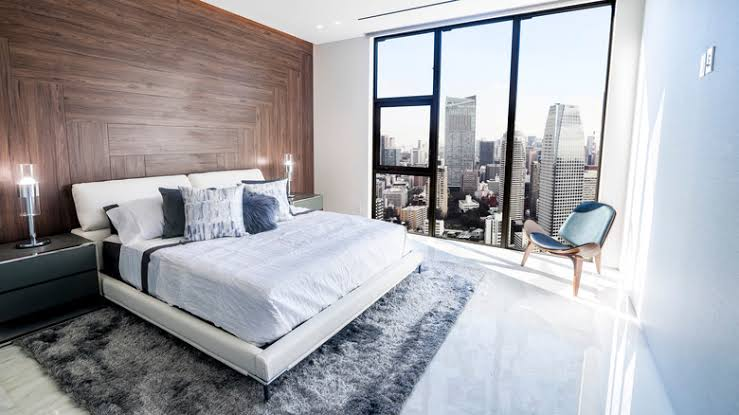
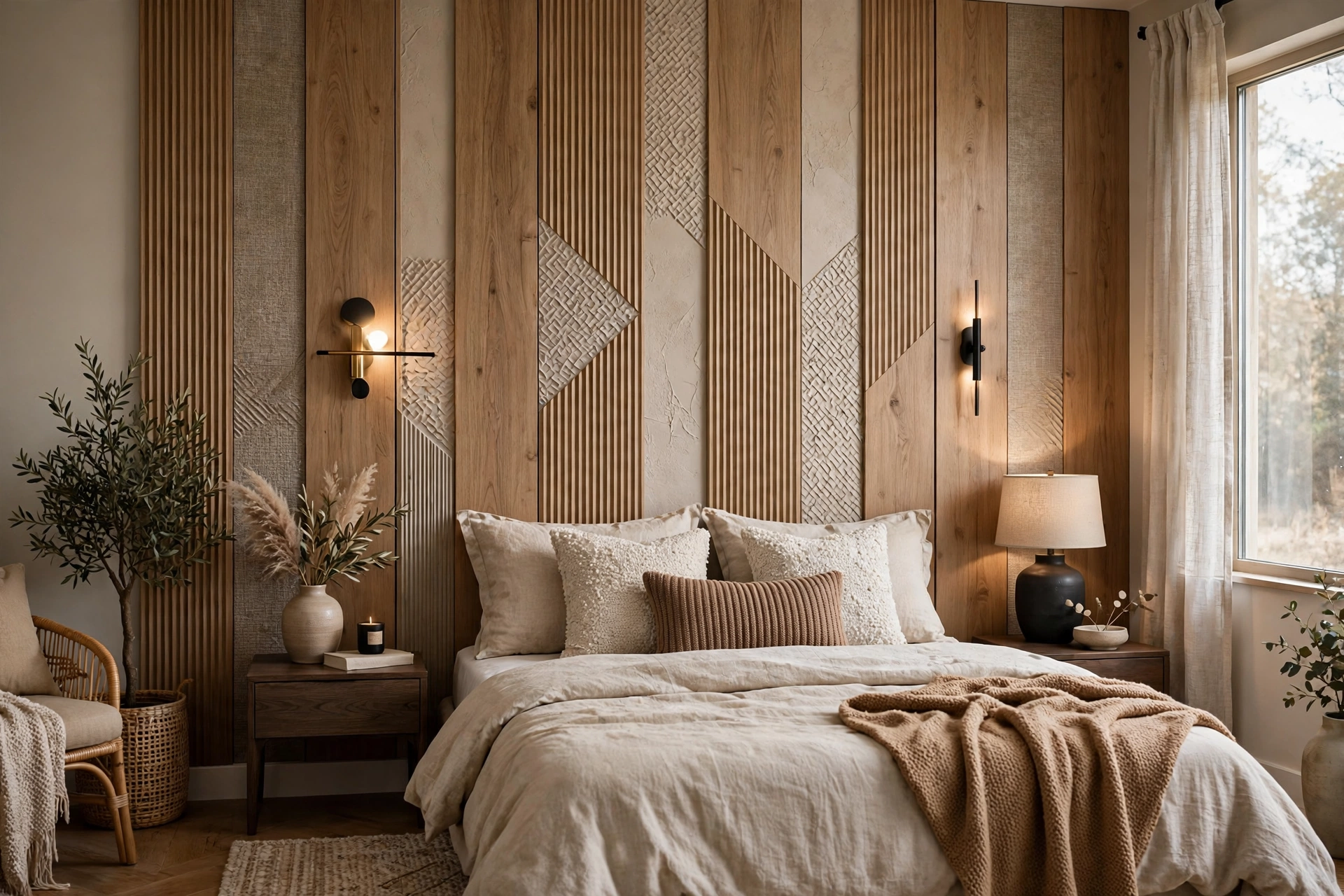
The short answer: the most successful bedroom accent walls use one wooden texture on one wall, usually behind the bed, in a tone close to the room’s existing palette, with vertical lines to add height or horizontal lines to add width, and with lighting planned into the design rather than added as an afterthought. Slatted and fluted panels suit modern rooms, shiplap suits softer traditional schemes, and carved or geometric relief suits a room that can carry a bolder statement.
Reading the Room First: Light, Bed Position, and the Wall That Deserves the Panels
Before ordering a single board, spend a few days noticing how the bedroom actually behaves. Which wall catches morning light, and which one falls into shadow by evening? A dark walnut wall on a wall that never sees sun can turn a bedroom into a cave, while the same walnut on a sunlit wall glows all afternoon.
Measure the bed before you measure the wall. A panel wall should extend at least a little beyond the bed on both sides, or it will look like a headboard that ran out of ideas, and it should run high enough to feel architectural rather than decorative — floor to ceiling if the room can carry it. The rule is simple: panel the wall you look at most, not the wall with the most empty space.
Slats, Flutes, Shiplap, and Carved Relief: Picking the Texture That Suits Your Bedroom
Vertical slats — narrow strips of wood separated by slim shadow gaps — draw the eye upward, which makes standard ceilings feel taller. Horizontal slats do the opposite job: they stretch a room sideways, which suits narrow bedrooms and low, wide beds. Fluted panels are the softer cousin of slats. Instead of separate strips with open gaps, a fluted panel is a continuous board carved with rounded vertical grooves, so the surface reads as one undulating wave and feels more refined.
Shiplap brings a calmer, coastal feeling and takes paint beautifully. Carved and geometric relief panels are the boldest option, using routed patterns such as chevrons, diamonds, or arches to turn the wall into a piece of furniture in its own right.
Wood Species and Finishes That Stay Sophisticated Instead of Turning Rustic
The species you choose decides whether the wall reads as refined or as a barn conversion. White oak is the current favourite for sophisticated bedrooms because its grain is calm and even, it takes both pale and mid-tone stains gracefully, and it does not yellow aggressively with age. Walnut is the dramatic, deep-toned option, best in larger bedrooms. Ash and pale maple keep a room bright; pine looks best painted or whitewashed.
Finish matters as much as species. A matte or satin lacquer keeps wood looking natural and touchable, while a high-gloss finish bounces light around but shows every fingerprint and dust mote. Limewash and whitewash finishes deserve special mention: they mute the grain just enough to let the texture, rather than the colour, do the talking.
How a Paneled Headboard Wall Is Planned Around the Bed, Not Just Behind It
The most common mistake in bedroom panel walls is treating the wall and the bed as separate projects. They are one composition. A panel wall that stops exactly at the edges of the bed looks like an afterthought, while one that runs 15 to 30 centimetres beyond the mattress on each side frames the bed properly and gives bedside tables something to sit against. Think about the headboard itself, too. A tall upholstered headboard against a slatted wall can be beautiful, because soft fabric and hard wood contrast, but a low wooden headboard against the same wall can disappear into it.
Then there is the question of the rest of the room. A paneled wall earns its drama by being the only textured wall. Paint the remaining walls in a flat, quiet tone pulled from the wood — a warm white, a soft greige, or a muted sage — and keep the bedding in solid or subtly textured fabrics.
Lighting the Grooves: LEDs, Sconces, and Shadows That Make Texture Work at Night
A wooden panel wall is two walls in one: the wall you see in daylight and the wall you see after dark. Grooves and slats exist to catch light and throw shadow, so the lighting plan is half the design. A concealed LED strip along the top edge of a slat wall washes light down the grooves and turns the whole surface into a soft lantern, ideal for winding down in the evening. Wall sconces create a different mood: up-and-down lights throw twin fans of light across the texture, which makes fluted panels look almost liquid. Dimmers are not optional here. A panel wall at full brightness can feel like a stage set, while the same wall at thirty percent feels like a hotel suite.
- Warm white light (around 2700K) flatters wood tones; cool white light can make oak look grey.
- Hide LED drivers and cables behind panels, never taped visibly to the wall.
A Weekend Paneled Wall, Step by Step, From Bare Plaster to Final Coat
A straightforward slat or shiplap wall is a realistic weekend project for a confident DIYer, and the sequence matters more than the speed. Rushing the preparation is how a panel wall ends up wavy, gappy, or peeling within a year.
Measure the wall twice and mark every stud with painter’s tape; panels fixed only to plasterboard will eventually sag.
Paint the backing wall first.
Acclimatise real wood panels in the bedroom for 48 to 72 hours before fixing, so they do not shrink and open gaps as they dry.
- Cut and dry-fit the first few boards, checking the pattern around outlets and corners before fixing anything.
- Fix panels with adhesive plus brad nails into studs.
- Trim the edges with matching timber beading.
- Fill nail holes, sand lightly, and apply the final stain, oil, or lacquer after fixing.
Paneled-Wall Slip-Ups That Leave a Bedroom Looking Busy Instead of Refined
Most disappointing panel walls fail for the same handful of reasons. The first is paneling too many walls: one wall is a feature, while four walls turn a bedroom into a box that is hard to change later. The second is choosing a panel scale that fights the room — chunky boards in a small bedroom overwhelm the furniture, while hair-thin slats on a vast wall look fussy. The third is ignoring the ceiling and floor junctions: panels that stop short of the ceiling with a ragged gap, or that meet a skirting board at an awkward angle, draw the eye to exactly the place you least want it. Remove the skirting on the feature wall and run panels behind it, or fit a neat architrave.
What a Paneled Bedroom Wall Runs, and Where the Money Actually Goes
Prices vary widely by material and region, so the figures below are broad estimates for budgeting rather than quotations. The cheapest route is a DIY pine slat or MDF shiplap wall, where the timber is modest and the labour is your own weekend. Prefinished slat kits and WPC fluted panels cost more per square foot but arrive ready to fix, which saves finishing time and guarantees a consistent colour. Solid hardwood walls are the premium end: the timber, the joinery, and usually professional installation all push the price up, but the result can be sanded and refinished for decades rather than replaced.
Keeping Grooves Dust-Free and Finishes Fresh Year After Year
Dust grooves weekly with a microfibre duster or a vacuum brush attachment, working top to bottom so dust falls away from cleaned sections. Wipe solid wood occasionally with a barely damp cloth and a pH-neutral cleaner, and never saturate the surface, because standing water is the enemy of both veneer and MDF. Humidity is the quiet threat: wood expands and contracts with the seasons, so keeping indoor humidity in a moderate range, roughly thirty to fifty percent, protects both the panels and the rest of the room’s woodwork.
When a Paneled Bedroom Wall Belongs With a Carpenter or Joiner, Not a DIY Weekend
Several situations make professional help the sensible choice. Any design involving curved walls, complex geometric patterns, integrated lighting chases, or panels wrapping around corners and built-in wardrobes needs a joiner’s accuracy, because a millimetre of error repeated across a whole wall becomes a visible wave. Electrical work is another clear boundary: moving outlets, adding sconces, or wiring LED drivers into a wall should be done by a qualified electrician, not improvised behind timber that hides faults.
Bedroom Wooden Panel Wall Questions Homeowners Ask Before Ordering a Single Board
Will a wooden panel wall make a small bedroom feel smaller?
It can, but only if the tone is dark and the coverage is large. In a small bedroom, choose pale oak, ash, or a painted finish, keep the paneling to one wall, and let vertical slats add height rather than horizontal boards adding visual weight.
Do slatted panel walls actually improve bedroom acoustics?
Felt-backed acoustic slat panels can reduce echo and soften harsh reflections. They will not soundproof a room or block noise from next door, so treat them as an acoustic improvement, not a soundproofing solution.
Can a paneled wall work behind a television instead of behind the bed?
Yes, and it is a popular choice where the television wall is the focal point. Keep the panel tone calm so it does not compete with the screen, plan cable routes before fixing panels.
How do I clean dust out of deep panel grooves?
A vacuum with a soft brush attachment is the fastest tool, followed by a dry microfibre duster for the grooves themselves. For sticky marks on solid wood, use a barely damp cloth with a pH-neutral cleaner and dry the surface immediately.
Is MDF paneling a false economy in a bedroom?
Not necessarily. In a dry bedroom, veneered MDF panels look convincing, cost far less than solid wood, and stay dimensionally stable. The risk comes from moisture: MDF swells if it gets wet, so it is a poor choice for damp walls.
Should the panel wall match the bedroom furniture?
It should relate to the furniture, not match it exactly. A wall in the same wood as every piece of furniture can look like a showroom, while a wall that shares one tone with the bed frame and contrasts with the rest feels intentional.
The Bedroom That Wakes Up to Wood, Not a Blank Wall
A bedroom accent wall of wooden panels and decorative texture is, at its best, a quiet luxury. It simply gives the room a backbone: warmth under the eye, rhythm in the light, and a surface that rewards a second look without tiring of a hundredth one. Choose one texture, one wall, and one honest material, plan the lighting as part of the wall, and let the rest of the bedroom stay calm enough for the panels to do their work. Do that, and the first thing you see each morning will no longer be a blank wall waiting for a decision. It will be the decision, already made, and made well.