Passive Subwoofer Amplifier: What It Is and How to Match It
A subwoofer is the speaker that handles the lowest frequencies in a sound system. Some subwoofers come with an amplifier built in. These are called active. Others, called passive, have no amplifier at all, so they depend on a separate one to work. That separate unit is a passive subwoofer amplifier. If you own a passive subwoofer, or plan to buy one, this article explains what to look for, using the range on the Fosi Audio passive subwoofer amplifier collection page.
Active and passive, in plain words
An active subwoofer contains a speaker driver and an amplifier in one cabinet. You plug it into the wall and connect a signal cable, and it is ready. A passive subwoofer contains only the driver. It cannot make sound until an external amplifier sends power to it.
Passive designs are common in systems where the owner wants to choose the amplifier separately. They can also be smaller and lighter, because the electronics are elsewhere. The trade off is that you must pick an amplifier that suits the driver.
What the Fosi Audio page lists
The collection page lists five products. Three are single channel, or mono, amplifiers aimed at passive subwoofers.
The M03 is described as a mono subwoofer amplifier suitable for passive subwoofers. The page lists up to 150 W RMS at 4 ohms or 120 W at 8 ohms, and describes switchable modes called PBTL and SUB. A separate page on the same site describes the M03 as having switchable full frequency and sub bass modes and gives a figure of up to 300 W, so if power matters to you, check the product page and confirm which rating applies to your speaker.
The M04 is a compact mono amplifier rated at 100 W, described for passive home speakers and passive subwoofers. At the time the page was read, it was shown as sold out.
The M01 BT is a Bluetooth mono amplifier with a maximum output of 300 W. The page lists Bluetooth and RCA inputs and the PBTL and SUB modes.
What PBTL and SUB mean
PBTL stands for parallel bridge tied load. It is a way of combining the output stages of an amplifier so that they work together on a single speaker. In simple terms, it lets a compact amplifier deliver more current into one load, which is useful for a subwoofer that needs plenty of power. The SUB mode is intended for subwoofer duty, where the amplifier handles only the low frequencies.
The page does not explain these modes in detail, so read the product manual to see exactly how each is set and what it changes.
Why impedance matters
Impedance, measured in ohms, is the electrical resistance of the speaker. The M03 listing gives different power figures for 4 ohms and 8 ohms, which shows how the same amplifier delivers different power into different speakers. A lower impedance usually lets the amplifier deliver more power, up to the limits of the design.
Before buying, find the impedance of your subwoofer in its manual or on its label. Some subwoofers have dual voice coils, which can be wired in different ways to present different impedances. Make sure the amplifier is rated for the final impedance you end up with. Connecting a speaker with an impedance below what the amplifier supports can overheat it.
Power rating
Match the amplifier’s power to the subwoofer’s rated power handling. If the amplifier is far more powerful than the speaker can take, there is a risk of damage when the volume is high. If it is much weaker, the amplifier may run out of headroom and clip, which can also harm the speaker. A good match gives a little spare power without exceeding the speaker’s limits.
Connections
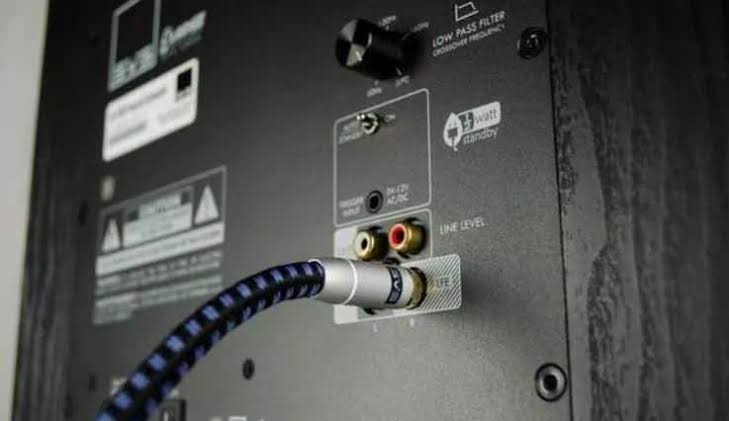
Check which inputs the amplifier offers. The M01 BT lists RCA and Bluetooth, so you can connect a wired source or a wireless one. Whatever the input, use a good quality cable and keep it away from power cables to reduce hum.
On the output side, use speaker cable of suitable thickness, and connect the positive and negative terminals correctly. Switch the amplifier off before connecting or changing anything.
Placement and care
Keep the amplifier in a spot with air around it, because any amplifier makes some heat. Do not cover it or stack things on top. Keep it dry and away from dust. Start with the volume low, then raise it gradually to find a comfortable level. Very low frequencies can be felt as well as heard, and long exposure at high levels can be tiring, so use sensible settings.
Who needs one?
If you have a passive subwoofer, you need one. If your current amplifier lacks power for low frequencies, adding a dedicated one may help. If you use a compact desktop or small room setup, a small mono amplifier like the M04 may be enough.
The page also describes these units as suitable for compact systems, and it mentions desktop and near field setups with small speakers.
Final checklist
Know your subwoofer’s impedance and power rating. Choose an amplifier rated for those values. Check the inputs and modes. Read the product manual and, where figures differ between pages, confirm them with the seller. With careful matching, a passive subwoofer amplifier will give you controlled low frequency output for many years.