Which Wall Panels Suit Residential Home Gyms Requiring Impact Resistance and Easy Cleaning
A home gym wall takes punishment no ordinary room wall ever sees. Dumbbells clip it on the way back to the rack, a barbell sleeve grazes it during a lift, resistance bands snap against it, and every session leaves sweat and chalk dust behind. Standard painted drywall was never designed for that life: it dents, scuffs, absorbs moisture, and looks tired within months. Choosing the right wall panel is therefore not cosmetic. It decides whether your gym stays clean and solid for years or becomes a cycle of patching and repainting.
The Short Answer: Which Gym Wall Panel Wins for Sweat, Knocks, and Cleanup
For most residential home gyms, rigid PVC wall and ceiling boards are the strongest all-round choice. They resist impact without denting, shrug off sweat and humidity, and wipe clean with soap and water. Fiberglass reinforced panels (FRP) suit walls that get genuinely wet, such as a basement gym or a space shared with a laundry. Plywood or oriented strand board (OSB) backing earns its place behind racks, rigs, and heavy storage, because it holds anchors that thin decorative panels cannot. The smartest home gym walls combine materials by zone: tough, washable panels where bodies and equipment make contact, and structural backing where heavy gear hangs. Avoid bare drywall in impact zones and untreated MDF anywhere moisture is possible.
What a Home Gym Wall Actually Endures: Dumbbells, Sweat, and Chalk Dust
Impact is the obvious force: plates lean against walls, kettlebells get set down hard, and a missed lift can send a barbell into the surface. Repeated small knocks matter more than one dramatic blow, because they accumulate as dents, cracks, and chipped paint. Moisture is the quieter enemy. Sweat evaporates and condenses on cool walls, chalk dust settles into every texture, and in garages and basements humidity swings with the seasons. A panel that survives a knock but absorbs moisture will still fail, swelling, staining, or feeding mold behind the surface. Cleaning effort is the third test: a gym wall should return to clean with a wipe, not demand sanding and repainting.
PVC Wall and Ceiling Boards: The Wipe-Clean Gym Wall Workhorse
Rigid PVC panels, sold as interlocking wall and ceiling boards, have become the default recommendation for home gyms for practical reasons. The material is fully waterproof, so sweat, humidity, and cleaning sprays never soak in, and it will not support mold growth on its surface. Its smooth, semi-gloss face resists scuffs and dents far better than painted drywall, and chalk dust wipes off instead of embedding in paint. Installation suits competent DIYers: panels typically screw directly to studs or furring strips with a tongue-and-groove joint, with no backer board, adhesive curing, or taping and mudding. Bright white finishes also bounce light around windowless spare rooms and garages. The trade-offs are real: PVC costs more per square foot than drywall or OSB, and it is not structural, so heavy racks still need stud or plywood backing behind them.
Fiberglass Reinforced Panels: The Wash-Down Choice for Sweat Zones
FRP is the textured, fiberglass-backed sheet long used in commercial kitchens, locker rooms, and school gyms, and it translates well to the hardest-working corners of a home gym. Its impact resistance is excellent, its surface tolerates frequent washing, and it stands up to moisture that would ruin drywall or unsealed wood. That makes FRP a strong choice for a basement gym wall, a wall behind cardio equipment where sweat spray concentrates, or any space doubling as a utility area. Installation is more demanding than PVC boards: FRP normally needs a solid backer such as plywood or OSB, plus adhesive and sealed seams, which adds material cost and labor. Seams deserve attention, because moisture trapped behind a poorly sealed panel can cause delamination over time.
Plywood and OSB Backing: The Anchor Wall for Racks, Rigs, and Heavy Storage
No decorative panel replaces structural backing where heavy equipment mounts to the wall. Three-quarter-inch plywood or OSB screwed into studs creates a continuous anchoring surface for squat racks, folding rigs, plate storage, mirrors, and shelving, spreading loads across multiple studs instead of concentrating them on one anchor. Plywood holds screws better than OSB and finishes more cleanly if left exposed, while OSB costs less and performs well when covered by another panel or painted. Many home gym builders install plywood on the equipment wall and cover the remaining walls with PVC or FRP. If plywood stays visible, seal it with durable, washable paint or a clear sealer so sweat and chalk do not stain the grain, and keep wood panels off direct contact with concrete floors by leaving a small gap.
Slatwall and Padded Wall Panels: Storage and Impact Cushioning in One Gym Wall
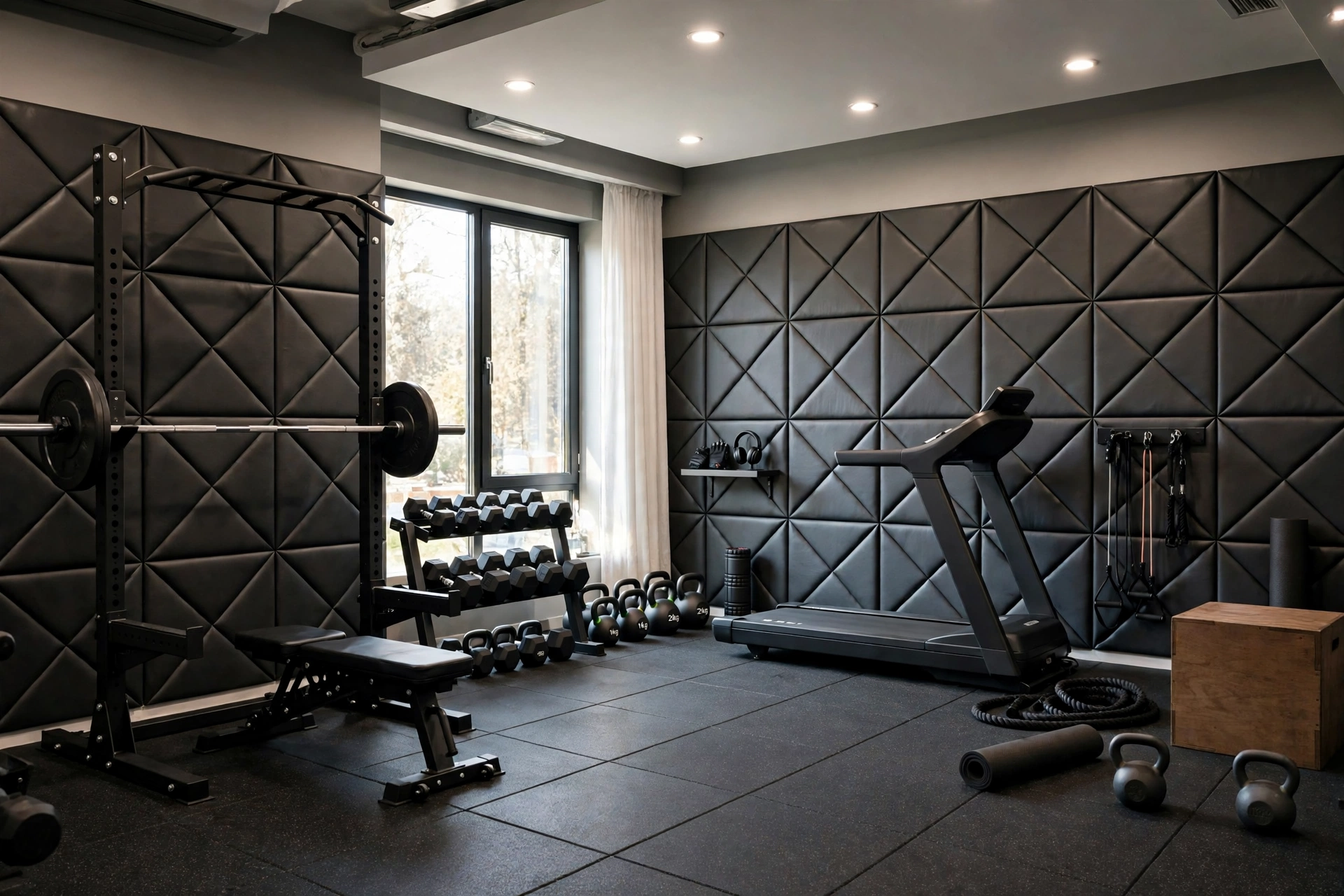
Two specialist options solve problems flat panels cannot. Slatwall, the grooved panel familiar from retail displays, turns a gym wall into organized storage: hooks, bins, and brackets hold bands, jump ropes, belts, and accessories within reach, and heavy-duty slatwall over plywood backing can carry loaded storage. It belongs on an accessory wall rather than a lifting wall, since grooves collect chalk dust and the panel itself is not built to absorb barbell strikes. Padded wall panels, foam over an OSB backer wrapped in flame-retardant vinyl, cushion the wall where bodies are most likely to strike it, such as a stretching area or martial arts corner. They wipe clean and absorb glancing blows, but they are not a substitute for structural protection against dropped plates, and torn vinyl needs prompt repair.
Side-by-Side: Home Gym Wall Panel Materials Compared
The table below distills the trade-offs. Ratings reflect typical residential products; individual brands vary, so check the manufacturer's specifications before buying.
Installing Gym Wall Panels So They Survive Plate Rattles and Anchor Loads
Even the best panel fails when hung poorly. A gym wall vibrates, plates rattle, and equipment shifts, so fasteners must reach studs or solid backing, panels need room to expand slightly with temperature, and seams need sealing where moisture is expected. The sequence below covers a typical PVC-over-backing installation; FRP and slatwall follow the same logic with their own adhesives and trims.
Fix moisture first. Repair leaks, improve ventilation, and let damp walls dry fully before covering them, since panels hide damage rather than curing it.
Mark every stud and plan the equipment wall, so backing lands exactly where racks, mirrors, and anchors will hang.
Install three-quarter-inch plywood backing on equipment walls, screwed into studs, with a small gap above concrete floors.
Fit panels from a corner outward, keeping joints tight, following the manufacturer's fastener spacing, and sealing wet-zone seams with compatible sealant.
Mount gear into backing, not panel alone, and test before training hard: load racks, tug anchors, and correct any flex or loose fasteners.
Cleaning Chalk, Sweat, and Scuffs Without Damaging Your Gym Walls
A gym wall cleaning routine should be short enough to actually happen. Daily, wipe high-touch areas with a damp microfiber cloth. Weekly, wash PVC, FRP, or SPC surfaces with warm water and a pH-neutral cleaner, and brush chalk dust out of slatwall grooves. Monthly, inspect seams, trims, and padded vinyl for tears or lifting edges, and check behind movable equipment for trapped moisture. Avoid abrasive scouring pads on PVC and SPC finishes, which dull the surface and make future dirt stick harder.
- Daily: damp microfiber wipe of high-touch wall areas.
- Weekly: warm water and pH-neutral cleaner on washable panels; brush slatwall grooves.
- Monthly: inspect seams, trims, and vinyl covers; check behind equipment for moisture.
Gym Wall Panel Missteps That Leave Dents, Stains, and Loose Racks
The most common home gym wall failures are predictable, and most trace back to choosing a panel for its looks rather than its job. Bare drywall behind a rack dents within weeks and cracks where plates lean. Unsealed MDF or particleboard swells in a humid garage and crumbles at the base. Thin decorative panels hung with drywall anchors alone pull away under a loaded storage hook or a mirror's weight. Covering a damp wall without fixing the moisture source traps water and grows mold out of sight. Skipping expansion gaps makes long PVC runs buckle as temperatures change, and forgetting ventilation turns even a waterproof wall into a clammy room.
What Home Gym Wall Panels Cost, Installed and Over Time
Prices vary by region, brand, and whether you DIY or hire out, so treat the figures below as planning estimates rather than quotes. The cheapest wall is rarely the cheapest gym: drywall costs little upfront but demands repainting and repair, while PVC costs more initially and then asks for almost nothing. Factor in backing, trims, fasteners, and sealant, not just the panel price.
When a Gym Wall Job Belongs With a Builder or Electrician, Not a Weekend DIY
Most panel installations are comfortable DIY work, but some situations call for a professional. Any wall forming part of a fire separation between a garage and living space must keep its rated assembly intact; covering or altering it with the wrong materials can breach local building rules, so check requirements before changing it. Electrical work, such as moving outlets, adding circuits, or installing lighting in a newly paneled wall, belongs with a qualified electrician. Structural changes, like removing studs or hanging a very heavy rig, deserve a builder's assessment.
Final Thoughts: Building a Home Gym Wall That Keeps Up With Your Training
The right home gym wall is a system, not a single product. Washable, impact-resistant panels handle the daily punishment, plywood backing carries the heavy gear, and zone-by-zone choices keep costs sensible. Start with the lifting wall's structure, cover the sweat zones with something you can wipe in minutes, and leave decorative finishes for areas that never take a hit. Measure your walls, list what mounts to each one, and choose accordingly.
Home Gym Wall Panel Questions, Answered
Can I put gym wall panels directly over existing drywall?
Yes, in most cases. PVC and SPC panels can screw through drywall into studs, and plywood backing can go over drywall too. The exception is a damp or damaged wall: fix moisture and repair soft or moldy drywall first, because covering damage only hides it while it worsens.
Do I need plywood behind PVC panels for a squat rack?
Yes. PVC panels are not structural and will not hold rack anchors on their own. Install three-quarter-inch plywood backing into the studs first, then fit the panels over it and drive rack fasteners through both layers into the backing and studs.
Which gym wall panel handles chalk dust best?
Smooth, non-porous surfaces such as rigid PVC, FRP, and SPC handle chalk best, because dust wipes off instead of embedding. Avoid heavily textured or fabric finishes in chalk zones, and wipe or vacuum chalk dust regularly before it builds into a film.
How do I clean sweat stains off home gym walls?
Wipe washable panels with warm water and a pH-neutral cleaner using a microfiber cloth, and dry the surface afterward. Avoid abrasive pads, which dull finishes. On painted or wood walls, sweat stains may need a gentle cleaner followed by washable paint, which is one reason washable panels suit gyms better.
Can padded wall panels protect against dropped weights?
Padded panels cushion glancing contact and protect people, but they are not designed to stop dropped plates or barbells. For drop zones, use thick rubber flooring and keep heavy plates off the wall, reserving padded panels for body-contact areas such as stretching and martial arts corners.
What wall panel works best in a damp basement gym?
FRP over a solid backer with sealed seams, or rigid PVC boards, both handle basement humidity well. Fix the damp source first, ensure ventilation or dehumidification, and avoid untreated wood or standard drywall where moisture persists.