The Case for Stainless Steel: A Litter Box That Outlasts the Smell
Litter boxes fail in a predictable way. The first year is fine. Then the plastic starts to hold odor even after scrubbing, the surface develops hairline scratches where bacteria settle, and the box that once looked clean now carries a smell you notice from the hallway. You have not done anything wrong. Plastic is porous under a cat’s claws, and once ammonia works into those micro-scratches, no amount of soap reaches it.
Stainless steel changes that equation. It is non-porous, does not absorb odor, and stands up to the scraping that happens every time a cat covers their business. It costs more up front and it is heavier to move. But for owners who have replaced three plastic boxes in as many years, the trade-off is easy to see. This article covers what stainless actually solves, how it behaves in daily use, and how to choose a box that fits your cat and your routine.
Why Plastic Boxes Go Bad
Most litter boxes are made from polypropylene or similar plastics because they are cheap, light, and easy to mold into scoops and hoods. The downside is structural. Cat claws score the surface, and those scratches are where urine and bacteria collect. Over months, the plastic absorbs odor to the point where a freshly washed box still smells faintly of ammonia. The usual response is replacement, which makes a “cheap” box expensive over time.
Plastic also flexes. A large box that bends when lifted can crack at the rim, and hooded designs have seams where litter dust and moisture gather. None of this makes plastic unusable — millions of cats live happily with plastic boxes — but it explains why so many owners eventually look for a material that does not degrade.
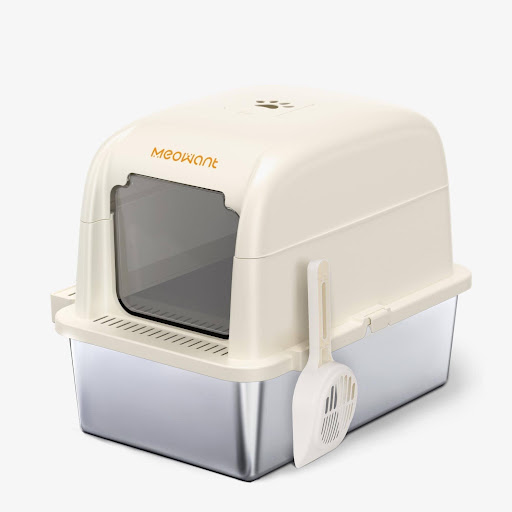
A stainless steel cat litter box addresses the root cause rather than the symptom. The surface does not absorb liquid, so odor has nowhere to lodge. It resists scratching, so the finish stays smooth. And because it does not need frequent replacement, the lifetime cost often comes out lower than a series of plastic boxes.
What Stainless Actually Changes Day to Day
The first difference you notice is the clean. A stainless pan rinses out without the faint residue that plastic leaves behind, and it does not hold onto the smell of a previous scooping. For owners who are sensitive to odor or who live in small apartments, that difference is immediate and persistent.
Odor, scratches, and the hygiene loop
Ammonia is the culprit in most litter box complaints. It is produced when bacteria break down urea, and it clings to porous surfaces. Because stainless is non-porous, routine washing actually removes the source instead of pushing it deeper. The box dries faster too, and a dry box does not support the same bacterial growth as one that stays damp in the corners.
Scratching is the other long-term factor. Cats dig, and a determined digger can rough up plastic quickly. Stainless resists that wear, which keeps the surface easy to clean and prevents the shallow grooves where clumps stick. The practical result is fewer scrubbing sessions and a box that still looks and smells clean years in.
Weight, temperature, and sound
Stainless is heavier than plastic, and that is mostly a feature: a heavy box does not slide across the floor when a cat launches out of it. It also feels cooler to the touch, which some cats like and others ignore. The one real drawback is noise: metal amplifies the scrape of a scoop and the clatter of litter being kicked. A silicone mat or a rubberized base under the box quiets most of that.
Choosing a Box Your Cat Will Accept
Material matters, but size and access matter more to the cat. A stainless box that is too small will be avoided regardless of how well it cleans. Aim for a pan long enough that the cat can turn around without stepping in their own work, and low enough at the entry that a senior cat can walk in without a jump.
Open pans are the safest starting point. Hooded stainless designs exist, but they add seams and reduce airflow, and many cats prefer the visibility of an open box. If your cat is a high sprayer, look for a box with raised sides rather than a full hood, and add a splash guard only if the wall behind the box is getting wet.
Think about the liner question before you buy. Some owners use liners to simplify disposal, but a liner defeats part of the point of stainless, since it reintroduces a porous layer and can trap moisture underneath. If you want the full benefit of the material, skip the liner and scoop into a bag instead. A stainless pan with smooth corners cleans in under a minute.
Depth matters for litter management. A box that is too shallow sends litter over the side with every dig; one that is too deep makes scooping awkward for the owner. Look for a pan with a rim that keeps litter in without creating a high wall the cat has to climb. Wide, shallow entry plus deeper sides is the combination most cats and owners agree on.
Living With Stainless Long Term
Maintenance is simple, which is the point. Scoop daily, wash weekly with a mild pet-safe cleaner, and dry fully before refilling. Avoid abrasive pads that can dull the finish, and skip bleach in favor of cleaners formulated for pet areas. Stainless tolerates most soaps, but leaving strong chemicals to sit is never a good idea.
Meowant builds its stainless litter boxes around this simplicity: a smooth pan, a design that stays stable under a cat’s weight, and materials chosen to keep odor from taking hold. That is a quiet kind of product design, but it is the kind that ends the cycle of buying a new box every year.
When Stainless Is the Wrong Choice
As sensible as the material is, it is not right for every household. If you need a box you can carry up and down stairs, the weight becomes a daily annoyance. If your budget is tight and your current plastic box is holding up well, there is no urgent reason to replace it. And if your cat is a determined sprayer, no pan material will solve the wall, the floor, or the baseboard — that calls for a different box design and, often, a vet conversation.
There is also the matter of habit. Owners who like liners and empty the whole box into a bag each week may find steel offers less advantage, since the liner is doing the odor work and the pan underneath is rarely the problem. In that setup, the right upgrade may be a bigger plastic box rather than a different material. Stainless pays off for people who scoop and rinse and want those actions to actually reset the box.
Weigh the cost over time rather than at the register. A steel pan costs more today and much less per year after that; a plastic pan costs less today and quietly more as it degrades. Neither math is wrong. The question is whether you expect to replace the box again, and how much the smell of an aging plastic pan bothers you.
Setting Up a Stainless Box for Success
The first placement matters more than the material. Put the box where the cat can see the room approach and where the escape route is clear; cats dislike being cornered while they are vulnerable. Keep it away from the food and water bowls, and give it a wall on one side so the cat can brace while digging. A stainless pan on a hard floor is stable, but a thin mat underneath keeps litter from skittering and protects the finish from grit.
Litter choice deserves the same care. Clumping litter works well in a smooth steel pan, and a medium fill — deep enough to dig, shallow enough to scoop easily — keeps both cat and owner happy. Skip scented litters that mask odor with perfume; with a non-porous box, you do not need them, and many cats find the scent off-putting.
Expect a short adjustment period even if the new box is bigger and cleaner. Cats are conservative about their bathroom, so run the two boxes side by side for a week or two, then retire the old one once the cat has clearly switched. Forcing the change by removing the old box too soon is the most common reason a good upgrade gets rejected.
A Box You Stop Thinking About
The best litter box is the one that does not become a recurring problem. Stainless steel will not scoop for you, and it will not fix a cat’s aversion to a box that is too small or too noisy. What it does is remove the material degradation that turns a clean box into a smelly one, and that changes how much time, money, and frustration the box costs over its life.
If you are replacing plastic boxes every few years, stainless is a sensible upgrade. Choose a size that lets your cat move freely, keep the entry low, plan for the extra weight, and clean it on a schedule that fits your household. Do that, and the box simply works — quietly, odor-free, and out of your way.