Online Education: How AI Tutors Are Changing Personalized Learning Experiences
Online education has changed significantly over the past decade. What started as simple video lessons and digital course platforms has evolved into a more interactive learning environment where technology can adapt to individual students. One of the biggest developments shaping this transformation is the rise of AI tutors.
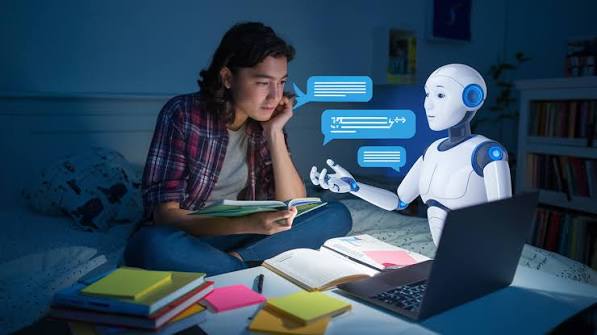
AI-powered learning assistants are changing how students study, practice, and receive feedback. Instead of every learner following the same lesson structure, AI tutors can adjust explanations, identify weaknesses, recommend resources, and provide support based on each person’s learning style and progress.
While AI tutors are not replacing teachers, they are becoming a powerful tool that helps educators and students create more personalized learning experiences.
What Are AI Tutors in Online Education?
AI tutors are digital learning assistants powered by artificial intelligence technologies that can interact with students, answer questions, explain concepts, and provide educational guidance.
Traditional online courses often provide the same content to thousands of learners. Students watch lectures, complete assignments, and take assessments at a fixed pace. However, this approach does not always match individual learning needs.
Some students understand concepts quickly and need advanced challenges, while others require additional explanations and practice. AI tutors help solve this problem by creating a more flexible learning experience.
An AI tutor can:
- Explain difficult topics in simpler language
- Provide instant answers to questions
- Create personalized practice exercises
- Identify learning gaps
- Suggest study strategies
- Track progress over time
This allows students to receive support whenever they need it instead of waiting for scheduled assistance.
The Shift From One-Size-Fits-All Learning
For many years, education systems have relied on standardized teaching methods. A classroom may include students with different abilities, backgrounds, and learning speeds, but teachers often have limited time to provide individual attention.
Online education expanded access to learning but introduced a similar challenge. A recorded course can reach more people, but students still experience different levels of understanding.
AI tutors introduce adaptive learning, where educational content changes based on student performance.
For example, if a student struggles with algebra concepts, an AI tutor can provide additional examples, review foundational topics, and offer easier practice problems before moving forward.
On the other hand, if a student demonstrates strong understanding, the system can introduce more advanced challenges instead of repeating basic information.
This creates a learning path that is unique to each student.
How AI Tutors Personalize the Learning Experience
The main advantage of AI tutors is their ability to analyze information and respond according to individual needs.
Personalized Explanations
Students often struggle because explanations are presented in a single format. Some learners understand through examples, while others prefer visual explanations or step-by-step instructions.
AI tutors can provide different approaches to the same topic.
For instance, a student learning economics may ask about inflation. The AI tutor could explain the concept using a simple everyday example, a detailed academic explanation, or a real-world business scenario depending on the learner’s preference.
Instant Feedback
Feedback is one of the most important parts of learning. However, waiting days for assignment reviews can slow progress.
AI tutors can provide immediate responses to practice questions and writing exercises. This allows students to understand mistakes while the information is still fresh.
Quick feedback encourages continuous improvement and helps learners stay engaged.
Identifying Learning Weaknesses
Many students do not realize exactly where they are struggling. They may understand general concepts but have specific knowledge gaps preventing further progress.
AI systems can analyze performance patterns and identify areas that need attention.
For example, an AI tutor may notice that a student repeatedly makes mistakes with certain mathematical operations and recommend targeted practice.
Benefits of AI Tutors for Students
AI tutors provide several advantages that can improve online learning experiences.
Learning Anytime and Anywhere
One major benefit of online education has always been flexibility. AI tutors expand this advantage by providing support outside traditional classroom hours.
A student studying late at night or during a weekend can still receive explanations and guidance.
This is especially valuable for:
- Working professionals
- International students
- Remote learners
- Students with busy schedules
Reduced Fear of Asking Questions
Some students hesitate to ask questions in classrooms because they worry about making mistakes or slowing others down.
AI tutors create a private learning environment where students can ask unlimited questions without embarrassment.
This encourages curiosity and exploration.
Improved Study Efficiency
Instead of spending hours searching through different resources, students can receive targeted help quickly.
AI tutors can summarize complex information, suggest relevant materials, and organize study plans based on upcoming goals.
This helps learners use their time more effectively.
How AI Tutors Support Teachers and Educational Institutions
AI tutors are not only beneficial for students. They can also support teachers by reducing repetitive tasks and providing additional insights.
Educators can use AI tools to:
- Create personalized assignments
- Analyze student progress
- Generate practice materials
- Identify students who need additional support
- Automate basic administrative tasks
This allows teachers to spend more time focusing on creative teaching, mentorship, and meaningful interactions.
AI works best as a supporting tool that enhances human teaching rather than replacing it.
Challenges and Concerns Around AI-Powered Learning
Despite the advantages, AI tutors also create important questions about the future of education.
Accuracy of Information
AI systems can sometimes provide incorrect or incomplete answers. Students and educators need to verify important information, especially in advanced academic subjects.
Human guidance remains essential for critical thinking and deeper understanding.
Privacy and Student Data
AI learning platforms collect information about student behavior, progress, and learning patterns.
Educational organizations must ensure that student data is protected and used responsibly.
Clear privacy policies and strong security practices are important as AI adoption grows.
Maintaining Human Connection
Education is not only about information. Teachers provide motivation, emotional support, creativity, and real-world experiences.
A completely automated learning environment may lack the human connection that helps students develop confidence and communication skills.
The Future of AI Tutors in Education
AI tutors are likely to become a normal part of digital learning environments. Future systems may become more advanced by combining artificial intelligence with virtual reality, voice interaction, and immersive learning experiences.
Students may eventually have personalized digital learning assistants that understand their goals, learning history, and preferred methods of study.
Schools, universities, and businesses may also use AI tutors for professional training and continuous education.
The future of learning will likely involve collaboration between human educators and intelligent technology.
Final Thoughts
AI tutors are changing online education by making learning more personalized, flexible, and accessible. Instead of forcing every student through the same learning path, artificial intelligence allows education to adapt to individual needs.
The most valuable role of AI tutors is not replacing teachers but expanding educational opportunities. When combined with human expertise, AI-powered learning tools can help students understand difficult concepts, improve skills, and learn at their own pace.
As technology continues to develop, personalized learning experiences powered by AI may become one of the most important changes in modern education.