Beautiful Interior Improvements to Give Your Home a Fresh and Modern Appearance
Most homes do not need a full remodel to feel fresh and modern. They need a handful of well-chosen interior improvements, made in the right places, that change how the rooms look and feel without knocking down walls or tearing up floors. Paint, light, hardware, and a few surface changes can do more than a major renovation in a house where the layout already works — and they can be finished in weekends rather than months.
The improvements in this guide are deliberately surface-level: they work within the existing footprint of the house, they are mostly DIY-friendly, and they are chosen for how quickly they show. You will find a clear order of work — edit first, then paint and texture, then fixtures and floors, then the finishing pieces — so that each change builds on the last instead of fighting it. The result is a home that looks modern, feels brighter, and still has its own character.
The Short Answer: How to Freshen a Home’s Interior Without a Remodel
The fastest way to give a home a fresh, modern appearance is to edit clutter, repaint in warm neutrals, replace dated hardware and light fixtures, and add layered lighting with large mirrors. These surface improvements work within the existing layout, cost far less than a remodel, and can be completed room by room on weekends. The key is consistency: one wall colour, one metal finish, and one timber tone carried through the house, so the improvements read as a single modern home rather than a collection of separate projects.
A Fresh, Modern Appearance Starts With Editing, Not Buying
Before spending anything, edit the house. Remove the objects that have accumulated on every surface, the furniture that blocks light, and the decorations that no longer match the home you want. A useful rule is to clear every surface completely, then put back only three items per surface — a lamp, a plant, and one object you genuinely like. The room will look larger, calmer, and more modern immediately, and you will see clearly what actually needs replacing instead of guessing.
Editing also means looking at the house as a whole. Walk through with fresh eyes and note the things that make rooms feel dated: heavy patterned curtains, ornate picture frames, a cluttered mantelpiece, or a bookcase stuffed to the edges. Many of these can be fixed by removing, moving, or repainting rather than buying. A bookshelf with breathing room looks modern; the same shelf crammed full looks like storage. A home that has been properly edited needs far fewer purchases to feel fresh, because the good bones of the rooms are finally visible.
The Keep, Refresh, Buy Sort That Prevents Wasted Spending
Paint and Texture: The Fastest Interior Refresh
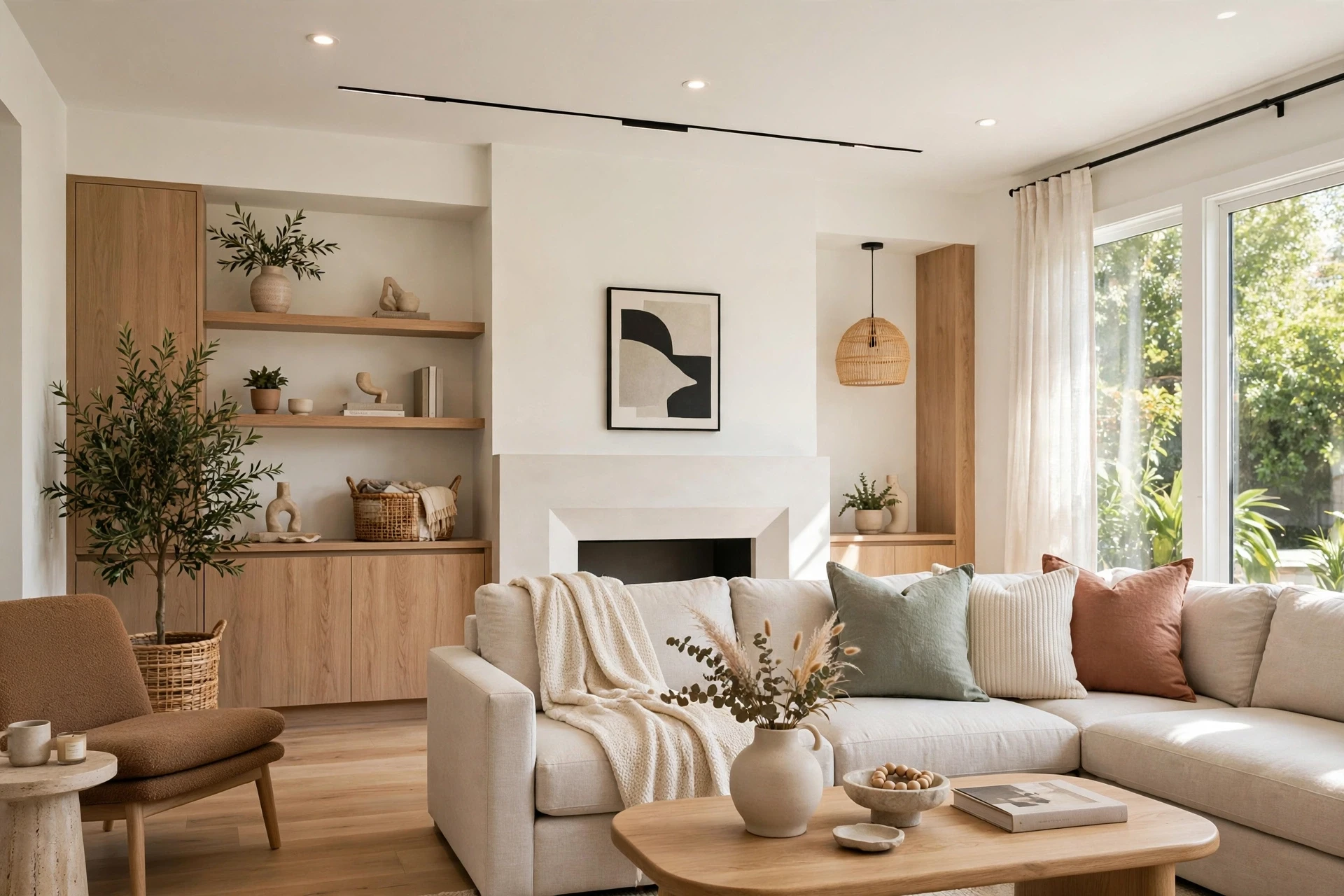
Paint is the cheapest and fastest way to modernise an interior, and the right colour choice matters more than the brand. Warm whites, soft greige, and muted sage create a calm, modern backdrop that makes furniture and art look better, while deeper tones such as forest green, navy, or terracotta work best on a single accent wall where they add depth without darkening the room. Test colours on large patches in daylight and lamplight before committing, and paint walls, trim, and ceiling in the same colour family so the room feels cohesive rather than patched together.
Modernise Fixtures, Hardware, and Radiators Without a Remodel
The small fixtures in a house are the details that date it fastest, and they are also the easiest to change. Shiny brass taps, ornate light fittings, and worn cabinet handles can make an otherwise fresh room feel old, so swapping them for matte black, brushed nickel, or warm bronze versions pulls the whole interior into the present. Replace light switches and sockets with clean flat-plate designs, fit new lever handles on doors, and choose pendant lights with simple, minimal profiles. Each swap takes minutes and creates no mess.
Radiators are the fixture most homeowners overlook, yet an old horizontal panel radiator can dominate a wall and limit where furniture goes. Modern upright radiators use vertical wall space instead, freeing up the room, and anthracite or coloured designs can act as a deliberate feature rather than an eyesore. In kitchens and bathrooms, new taps and a modern showerhead are the equivalent upgrade — small, affordable, and noticed every single day. Together, these fixture swaps modernise a house room by room without a single structural change.
Flooring Tricks That Modernise a Room Without Replacing It
Replacing flooring throughout a house is expensive and disruptive, but a tired floor does not have to stay tired. Large-format rugs in a neutral tone can cover worn carpet or dated tile, define seating areas in open-plan rooms, and add the warmth and texture that hard floors lack. Choose a rug large enough for the front legs of the sofa and chairs to sit on it; a rug that is too small makes a room look smaller, while a properly sized one anchors the whole arrangement and makes the floor underneath almost irrelevant.
In kitchens and bathrooms, modern peel-and-stick vinyl tiles can be laid over a sound existing floor in a weekend, giving a fresh pattern and colour for a fraction of retiling. For timber floors, a professional refinish or even a thorough clean and a fresh coat of the right finish can restore boards that looked beyond saving. And in hallways, a long flatweave runner adds colour, protects the floor, and makes the entrance feel intentional. The goal is not to hide the floor but to make it part of the modern look, and these surface tricks do that without the cost of a full replacement.
Mirrors, Shelves, and Statement Pieces That Open Up a Room
A well-placed mirror is one of the most effective interior improvements there is. Hung opposite a window, a large mirror bounces daylight deep into a room and makes it feel almost twice as bright; hung in a hallway, it turns a dark corridor into a welcoming entrance. Choose a simple frame in your chosen metal finish, and hang the mirror at eye level rather than high on the wall. One large mirror is far more effective than several small ones, which tend to look cluttered.
Bring Warmth Into a Modern Interior So It Does Not Feel Cold
The most common complaint about modern interiors is that they feel cold, like a hotel lobby rather than a home. The fix is texture and warmth, not more decoration. Natural materials do the work: a timber side table, linen curtains, a wool throw, a jute rug, and ceramic vases soften hard lines and add the tactile variety that makes a room feel lived in. Plants help too — a snake plant, a pothos, or a ZZ plant in a corner softens a sharp modern silhouette, and even good-quality faux plants work where light or watering is a problem.
Interior Improvements Ranked by Weekend Effort
Some interior improvements take an hour and others take a weekend, so it helps to know which ones to do first. Editing and rearranging furniture cost nothing and can be done in an evening. Painting and hardware swaps take a weekend per room and give the biggest visible change. Flooring tricks and statement pieces are quick once the backdrop is right. The table below ranks the most useful improvements by effort, so you can plan a series of weekends that steadily transform the house instead of starting everything at once and finishing nothing.
Fresh-Look Mistakes That Make Interiors Feel Unfinished
The most frequent mistake is stopping halfway. A freshly painted room with old curtains, a new mirror above a tired radiator, or modern hardware on a stained worktop all look unfinished, because the eye is drawn to the one thing that was not updated. Finish one room completely — paint, fixtures, light, and surfaces — before starting the next, so every finished room looks intentional and the house improves steadily rather than looking half-done everywhere.
When an Interior Improvement Crosses Into Work for a Professional
Most interior improvements are safe for a confident DIYer: painting, swapping hardware, hanging mirrors and shelves, laying rugs, and fitting peel-and-stick tiles. The boundary appears when the work involves electricity, plumbing, or structure. Replacing a light fitting on an existing circuit is usually fine, but adding a new circuit, moving a fitting, or replacing a consumer unit should be done by a qualified electrician. Moving a radiator or changing pipework needs a heating engineer, and any work on gas appliances needs a registered gas engineer.
There are also jobs where a professional finish is visibly better for a modest extra cost. Skimming a damaged wall before painting, spraying cabinet doors, or fitting a large mirror safely on a plasterboard wall are all tasks where experience shows. If your home was built before the 1980s, have suspect materials such as old floor tiles or textured ceilings tested for asbestos before disturbing them, and bring in a specialist for any damp or mould problem rather than painting over it. A professional is not a sign of failure — it is how a weekend improvement becomes a lasting one.
Final Thoughts: A Fresher Home Without the Full Remodel
A beautiful interior does not require a full remodel. Edit first, paint in warm neutrals, modernise the fixtures and hardware, refresh floors with rugs and surface tricks, and finish with mirrors, shelves, and one statement piece per room — then add the warmth of natural materials and good light so the modern look feels like home. Done room by room, the transformation is affordable, manageable, and visible from the first weekend. Start with the room you see first every morning, and let the rest of the house follow.
Beautiful Interior Improvement FAQs
What is the fastest interior improvement I can make today?
Editing and rearranging furniture is the fastest — clear every surface, remove one piece of furniture per room, and move seating to face the light or the room’s focal point. It costs nothing, takes an evening, and often makes a bigger difference than any purchase.
Which colours make an interior look modern without feeling cold?
Warm whites, soft greige, and muted sage are the safest modern choices, because they brighten rooms while staying warm. Add depth with one accent colour such as deep green, navy, or terracotta, and warm the scheme further with timber, linen, and warm LED lighting.
Is there a way to update tired floors without ripping them out?
Yes, in most cases. Large neutral rugs, peel-and-stick vinyl tiles in kitchens and bathrooms, and refinishing timber boards can all refresh a floor for far less than a full replacement. Replace flooring only when it is damaged, uneven, or changes material at every doorway.
How do I choose the right size of rug for a room?
The rug should be large enough for the front legs of the sofa and chairs to rest on it — in most living rooms that means a rug at least 160 by 230 centimetres, and larger for big seating groups. A rug that is too small makes the room look smaller, while a properly sized rug anchors the furniture and defines the space.
Are peel-and-stick tiles a good idea for kitchens and bathrooms?
They are a good budget option when the existing floor is sound, flat, and clean, and they can be fitted in a weekend. They are less durable than ceramic tile and may not suit very wet areas or uneven floors, so treat them as a refresh rather than a permanent replacement, and follow the manufacturer’s preparation instructions carefully.
How many statement pieces should a room have?
One strong statement per room is enough — a sculptural light, a large piece of art, or a distinctive mirror. Everything else should stay calm and consistent, because a room with several competing statements looks busy rather than modern, while a room with one focal point and clear surfaces looks intentionally designed.